Breathing Exercises for Dummies - A Detailed Summary
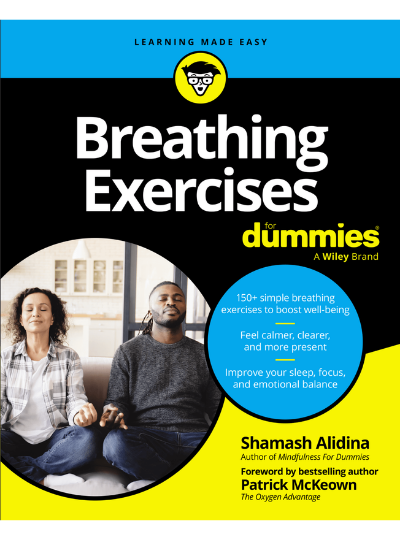 a ‘breathing exercises for beginners’ type book \
Hello, I’m Shamash Alidina, and if you’re reading this, congrats! You’re already doing something essential for survival… you’re breathing.
But here’s the twist: just because you breathe about 20,000 times a day doesn’t mean you’re doing it optimally.
The way we breathe has profound effects on our health, energy, focus, sleep, and emotions.
I wrote this book to be a practical, easy-to-follow guide to transforming that unconscious, automatic process into a conscious, life-changing skill.
Why Did I Write Breathing Exercises for Dummies? (My Journey from Stress to Stillness)
When I started my career as a schoolteacher in my early twenties, stress quickly became an overwhelming companion. I often felt exhausted and frustrated.
I’d hoped regular physical exercise would help, but despite running regularly, the mental and emotional strain lingered. I was literally breathing shallowly and hurriedly, mirroring my internal stress levels.
It was only when I found myself in a meditation class that I had my moment. I thought the whole idea of “breathing” or “meditation” was ridiculous, but for the first time ever, my mind quieted down.
It was like discovering that the choppy surface of a lake could be related to in a totally different way.
This was a profound revelation: breathing was not just something I tried now and then. It was something I needed to live and share. My goal in writing this book is to help you build a meaningful connection with your breath, discovering what this reliable friend is truly capable of.
What Exactly Are Breathing Exercises?
Breathing exercises are specific techniques that help you control how you breathe to positively impact your physical, mental, and emotional state.
They are structured workouts for your respiratory system, training your breathing muscles and adjusting your patterns to work more efficiently.
But they are more than just physical training; they are also a form of mental and emotional training, acting like a built-in stress management system that you can activate anytime, anywhere.
Breathing Exercises vs. Breathwork
-
Breathing Exercises (Conscious Breathing): Specific techniques like Box Breathing or 4-7-8 that guide your breath for a desired effect: calming nerves, boosting energy, or improving sleep. Quick, focused and aimed at managing stress or boosting well-being.
-
Breathwork: Can refer to doing one or more breathing exercises in a sequence, sometimes led by a teacher. It may explore deeper emotional release or altered states of consciousness.
The Three Essential Ingredients of All Breathing Exercises
-
The Breath Pattern (How You Breathe): The mechanical foundation, including Pace (rapid to energize, slow to calm) and Depth (shallow vs. diaphragmatic).
-
The Intention (Why You’re Doing It): Guides the exercise. For example, extended exhale breathing for calm or Kapalabhati for energy.
-
The Attention (Where Your Mind Is): Transforms mechanical movement into mindful practice. Focus on the sensation of air at your nostrils, belly movement, or counting rhythm.
Why Use Breathing Exercises? What Are the Benefits?
Breathing is the one bodily function that is both automatic and under conscious control, making it a powerful tool for influencing how you feel. Proper breathing unlocks a cascade of benefits:
Nervous System:
-
Regulates autonomic function, shifting you from ‘fight-or-flight’ to ‘rest-and-digest’.
-
Slow, extended exhales stimulate the vagus nerve, reducing anxiety and stress hormones.
Cardiovascular Health:
-
Normalizes blood pressure and steadies heart rate.
-
Coherent breathing increases Heart Rate Variability (HRV), linked to resilience.
Respiratory Health:
-
Strengthens the diaphragm, improves efficiency, increases lung capacity, and ensures better oxygenation.
-
Nasal breathing boosts Nitric Oxide, improving circulation and immunity.
Mental and Emotional Clarity:
-
Decreases stress hormones.
-
Lifts mood, enhances focus, clarity, and cognitive performance.
-
-
Sleep Quality:
-
Reduces chronic sleep issues, lowers heart rate, and promotes relaxation.
-
Improves sleep patterns.
-
-
Physical Performance:
-
Boosts stamina and endurance.
-
Manages pain and improves posture by strengthening deep core muscles.
-
When Is the Best Time to Do Them, Where, and for How Long?
Consistency is the key, not duration. You don’t need special cushions or quiet spaces; your breath goes wherever you go.
How Long and How Often?
-
Start Small: Even one mindful breath (10 seconds) can release tension. You can feel it!
-
The Foundation: 5–10 minutes once or twice a day. Even five minutes consistently will make a noticeable difference in weeks.
-
Optimal Practice: Up to 20 minutes, twice a day for practices like Coherent Breathing.
When and Where to Integrate Them
-
Morning:
- 5–10 minutes of deep, intentional breathing (e.g., 4-6 Morning Energiser) before getting out of bed.
-
Work/Desk Time:
- Take three conscious breaths whenever checking emails or your phone.
-
Traveling/Commuting:
-
Practice mindful breathing while standing, sitting, or waiting.
-
Count your breaths to stay grounded.
-
-
Stressful Moments:
- Use Box Breathing or Extended Exhale Breathing before meetings or difficult conversations.
-
Before Sleep:
-
Combine gentle movement with 4-7-8 breathing.
-
Focus on making the exhale longer than the inhale.
-
How to Prepare for Breathing Exercises
1. Awareness
-
Notice your current breathing patterns without changing them.
-
Place one hand on your chest, one on your belly. Which moves more?
-
BOLT Test: After a normal exhale, pinch your nose and hold your breath until the first urge to breathe. Under 20 seconds = some dysfunction, over 40 = good.
2. Physical Preparation
-
Ribcage Mobilisation: Expand ribs in all directions.
-
Ripple Breath (3-Part Breath): Inhale sequentially: lower abdomen → lower ribs → upper chest; exhale in reverse.
-
Diaphragm Loosening: Massage upper abdomen, hum, or sing to relax the diaphragm.
My 10 Favorite Breathing Exercises (Quick Toolkit)
-
4-7-8 Breathing: Inhale 4, hold 7, exhale 8 (sleep & anxiety).
-
Diaphragmatic Breathing: Belly/lower rib expansion. Foundation of healthy breathing.
-
Box Breathing: Inhale 4, hold 4, exhale 4, hold 4 (calm & focus).
-
Alternate Nostril Breathing (Nadi Shodhana): Balance & clarity.
-
Ocean Breathing (Ujjayi): Gentle constriction in throat; relaxation & focus.
-
Humming Breath (Brahmari): Exhale with “mmm” sound; calms & increases Nitric Oxide.
-
Coherent Breathing: 5–6 breaths/min to synchronize heart & breath.
-
4-6 Breathing: Inhale 4, exhale 6 (focus & heart health).
-
1:2 Ratio Breathing: Exhale twice as long as inhale; deep relaxation & sleep.
-
Mini Breath Holds: Brief pause after exhale (3–5 seconds) to calm mind & increase CO₂ tolerance.
Common Mistakes When Doing Breathing Exercises
-
Shallow/Chest Breathing – Upper chest dominates, inefficient & stressful.
-
Paradoxical Breathing – Belly moves opposite of healthy pattern.
-
Over-breathing – Rapid, forceful inhalations expel too much CO₂.
-
Unconscious Breath Holding (“Email Apnea”) – Holding breath during focus.
-
Mouth Breathing – Bypasses nose filtration; linked to anxiety & poor sleep.
-
Forcing Breath Holds – Should resume breathing easily; don’t strain.
-
Expecting Immediate Perfection – Consistency matters more than perfection.
Safety & Warnings
Not all breathing exercises are safe for everyone. Read the book for detailed safety instructions.
-
Listen to your body—stop if dizzy or uncomfortable.
-
Avoid water during breath retention or deep techniques.
My Top Tip for Breathing
Befriend your breath, and always return to the nose and diaphragm.
Nasal and diaphragmatic breathing is the cornerstone. Simplify: allow belly movement, keep pace light and slow, and make exhale longer than inhale. Your breath is your constant ally.
Where to Get a Copy
Breathing Exercises for Dummies is published by Wiley and includes:
-
eCheat Sheet – Quick tips and common mistakes.
-
Online Audio Tracks – Guided exercises for relaxation, focus, energy, and sleep.
You can also explore:
-
5-week Breathing for Anxiety & Stress Relief programme
-
Free 10-day Breathing Exercise Challenge
-
Daily Mindfulness Club
Other recommended books: James Nestor (Breath) and Patrick McKeown (The Breathing Cure).
If you’d rather simply start practising, five of the book’s exercises are here with a guided audio for each.