5 Proven Breathing Exercises for Anxiety and Stress Relief – Achieve Calm Quickly
Stress and anxiety are common nowadays. Many people seek ways to manage feelings of stress or anxiety.
Breathing exercises and techniques are a powerful tool for this. They are simple, effective, and can be done anywhere.
In this blog, we will explore the best proven breathing exercises for anxiety and stress management.
Scroll down to find everything from box breathing to 478 breathing to one of my favourites, coherent breathing. These breathing exercises work well for beginners and experts alike.
I’m Shamash Alidina. I wrote Breathing Exercises For Dummies, and I guide a live meditation every weekday morning in the Daily Mindfulness Club. So everything below is something I teach regularly and practise myself, rather than a list I’ve gathered from elsewhere.
Why I Use These Myself
I faced some extra stress recently. I had to give a talk to a group of business people. I didn’t know any of them and didn’t know how they’d react to my talk. I felt nervous.
I noticed my stress levels rising as the time to speak approached. I also noticed my breathing becoming shallower and more rapid.
To calm myself down, I used diaphragmatic breathing combined with box breathing. At first I could only manage 2-2-2-2 (2 seconds in, 2 seconds hold etc) for the box breathing, but I gradually increased it to 4-4-4-4 (4 seconds in, 4 seconds hold etc) as I felt more at ease.
What’s the secret to using breathing exercises successfully? The secret is to notice how your body feels as you do the breathing exercise. If it feels too hard, don’t force it. Start with the breathing rate you can manage, and gently adjust it towards one of the breathing exercises below. A bit like how I did with the box breathing. Starting easy and building up gradually as I relaxed.
It works best if you choose the breathing exercise you enjoy the most.
What Are Breathing Exercises?

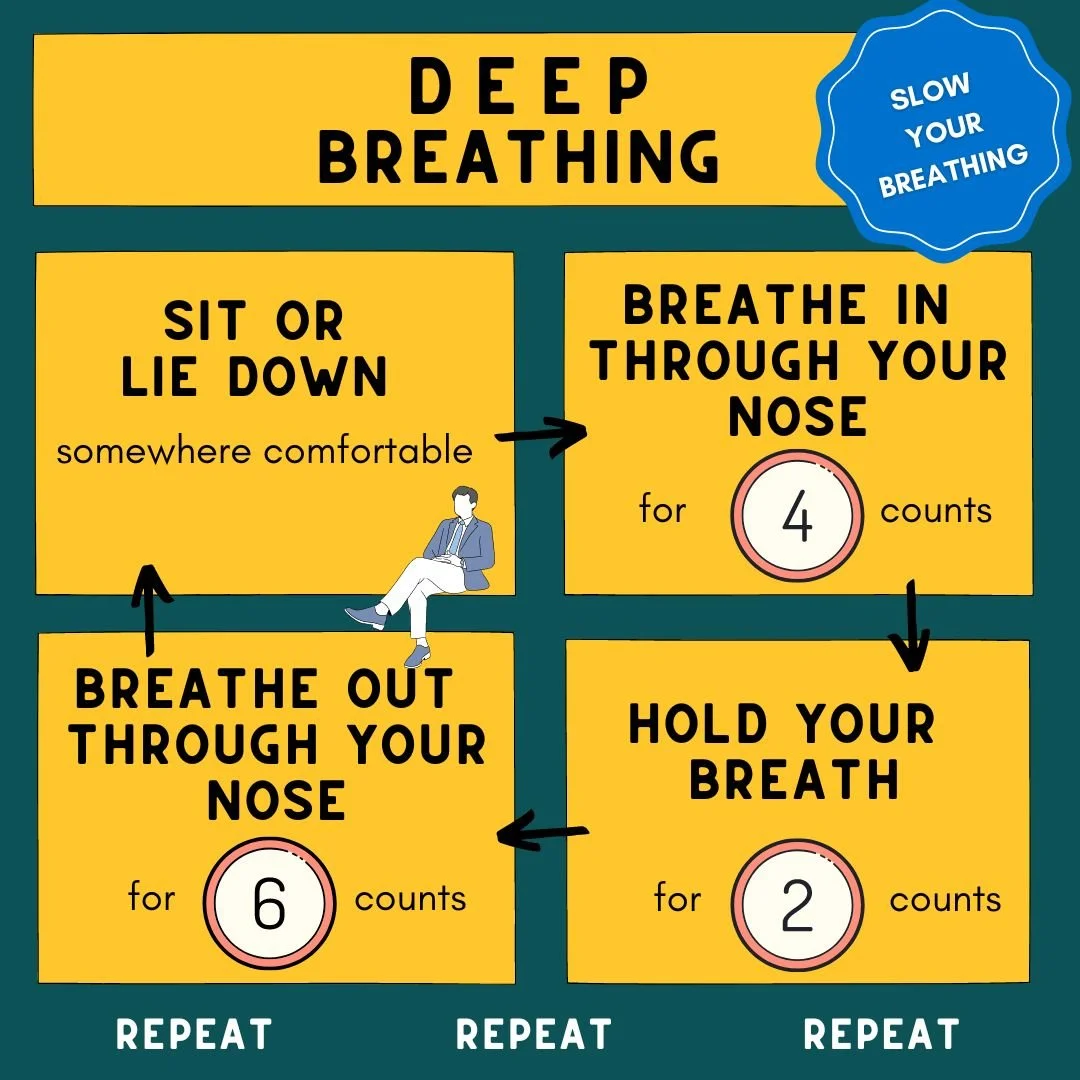
Breathing exercises are simple techniques to control your breath. They often help you breathe deeply and slowly. This practice calms the mind and relaxes the body.
When you are stressed or anxious, your breathing becomes rapid and shallow. This can make you feel more tense and uneasy. Deep, slow breathing helps reduce these feelings. It signals your brain to relax and lowers stress hormones.
Scientific studies support the benefits of breathing exercises. Research shows they can reduce anxiety and improve mental well-being. These exercises are a natural and effective way to manage stress.
Benefits of Breathing Exercises
Breathing exercises offer many benefits for your mind and body.
They reduce stress and anxiety. For example, deep breathing exercises help calm the nervous system. This lowers stress levels and creates a sense of peace.
These exercises enhance mindfulness and focus. By paying attention to your breath, you stay present in the moment. This sharpens your concentration and awareness.
Breathing exercises improve overall physical health. They increase oxygen flow into your body and brain, which boosts energy and vitality. Regular practice can improve lung function and heart health as well.
Lastly, breathing exercises boost emotional regulation. Controlled breathing helps manage emotions. It makes it easier to stay calm and balanced in challenging situations.
Top Breathing Exercises for Stress and Anxiety Relief
1. Diaphragmatic Breathing
Try it with me now. Six minutes, free, and nothing to sign up for. Press play and I’ll talk you through it.
Description:
Diaphragmatic breathing, also known as belly breathing, focuses on breathing deeply into the diaphragm.
How to Perform:
-
Sit or lie down in a comfortable position.
-
Place one hand on your chest and the other on your belly.
-
Inhale deeply through your nose, allowing your belly to rise.
-
Exhale slowly through your mouth, letting your belly fall.
-
Repeat for a few minutes.
Benefits:
-
Reduces tension and promotes relaxation.
-
Improves oxygen flow and lung capacity.
This is the one exercise where it helps to see it before you do it, because the hand positions tell you whether it’s working. This short demonstration from NewYork-Presbyterian Hospital shows it clearly.
If you’d like to go deeper, I’ve written a full comparison of belly breathing and chest breathing.
2. Box Breathing
Try it with me now. Five minutes, free, and I’ll count you through every side of the box.
Description:
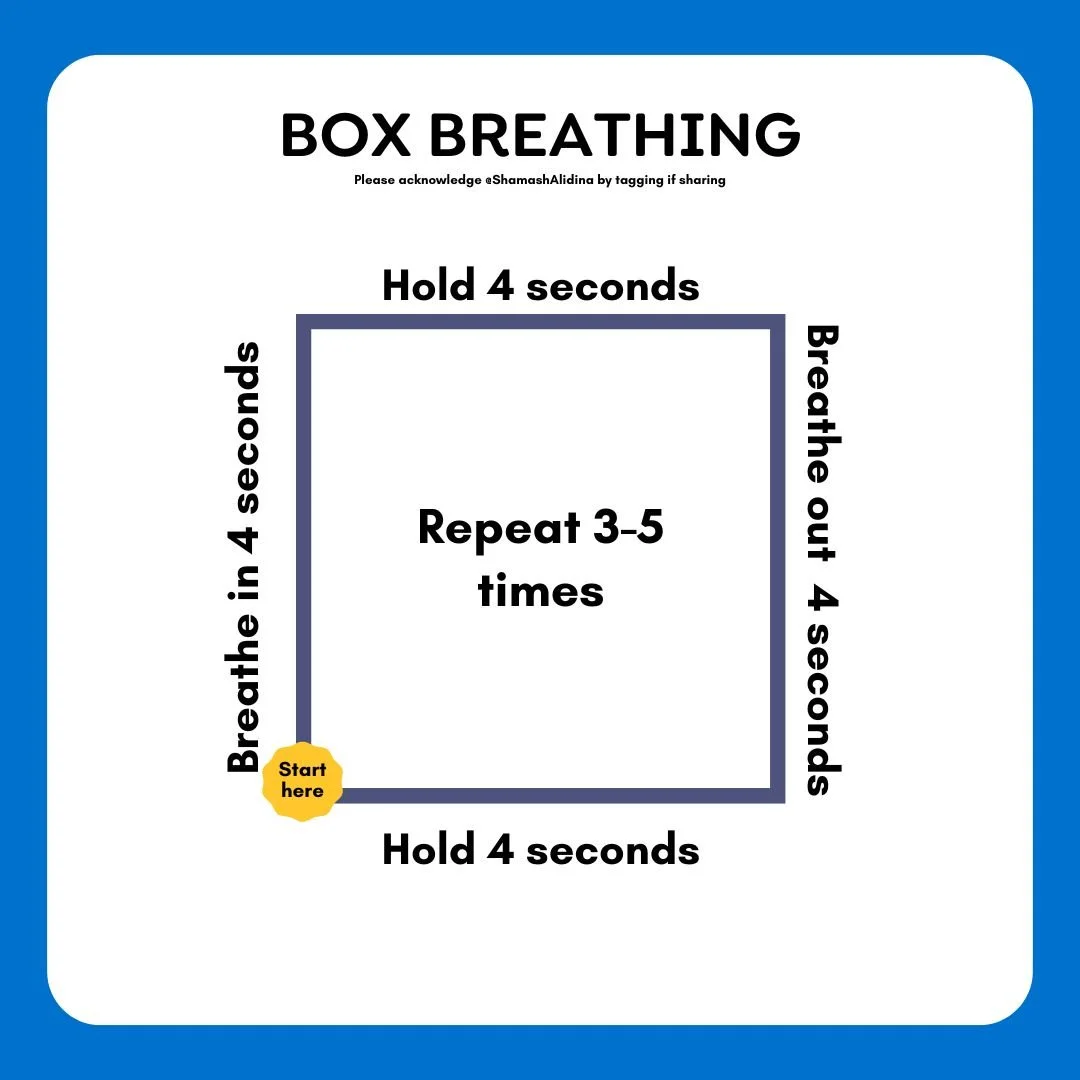
Box breathing, or square breathing, involves equal counts for inhaling, holding, exhaling, and pausing.
How to Perform:
-
Sit comfortably with a straight back.
-
Inhale deeply through your nose for a count of four.
-
Hold your breath for a count of four.
-
Exhale slowly through your mouth for a count of four.
-
Pause and hold for a count of four.
-
Repeat the cycle.
Benefits:
-
Calms the nervous system.
-
Enhances focus and concentration.
There’s a lot more to this one than the four counts suggest. I’ve written a full guide to mastering box breathing, and answered the question I get asked most often: how long should you do box breathing?
3. 4-7-8 Breathing Technique
Try it with me now. Three minutes, free, and short enough to fit anywhere in your day.
Description:
The 4-7-8 technique is a simple pattern that helps relax the body and mind.
How to Perform:
-
Sit or lie down comfortably.
-
Inhale quietly through your nose for a count of four.
-
Hold your breath for a count of seven.
-
Exhale completely through your mouth for a count of eight.
-
Repeat the cycle.
Benefits:
-
Quickly reduces stress.
-
Promotes better sleep.
Not sure whether to reach for this one or box breathing? I’ve compared box breathing and 4-7-8 side by side, and also 4-7-8 against coherent breathing.
4. Alternate Nostril Breathing (Nadi Shodhana)
Try it with me now. Five minutes, free, and I’ll tell you which nostril to close and when, so you don’t have to keep checking.
Description:
Alternate nostril breathing balances the flow of air through both nostrils.
How to Perform:
-
Sit comfortably with a straight spine.
-
Close your right nostril with your right thumb.
-
Inhale deeply through your left nostril.
-
Close your left nostril with your right ring finger.
-
Open your right nostril and exhale fully.
-
Inhale through your right nostril.
-
Close your right nostril and exhale through your left nostril.
-
Repeat the cycle.
Benefits:
-
Balances energy levels.
-
Enhances mental clarity and calmness.
The hand position is the fiddly part of this one, and it’s much easier to copy than to read. If you’d like to see it done first, this demonstration from YOGABODY is a clear one.
This one and box breathing do quite different jobs. I’ve set out when to use each.
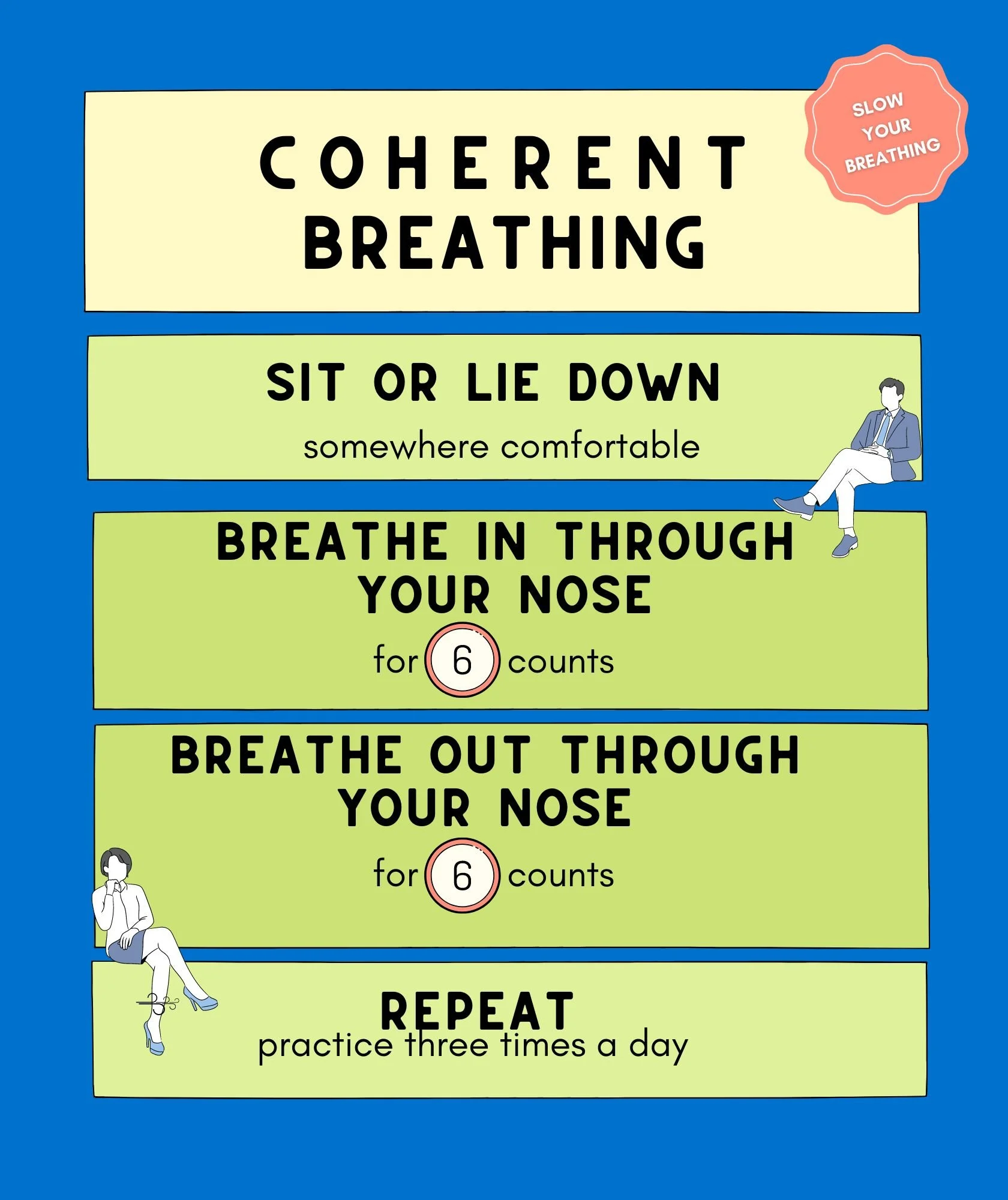
5. Resonant or Coherent Breathing
Try it with me now. Four minutes, free. If you only press play on one thing on this page, make it this one.
Description:
Resonant breathing involves breathing at a rate of five breaths per minute.
How to Perform:
-
Sit or lie down in a relaxed position.
-
Inhale deeply for a count of six.
-
Exhale slowly for a count of six.
-
Maintain a steady, rhythmic pattern.
-
Continue for several minutes.
Benefits:
-
Reduces stress and anxiety.
-
Promotes a sense of harmony and balance.
If I had to keep only one of these, it would be this one. Every Tuesday in the Daily Mindfulness Club we try a different breathing exercise, and we always finish with coherent breathing. There’s a reason it earned that spot. It’s simple, there’s nothing to count wrong, and it’s genuinely good for your heart as well as your general sense of wellbeing.
Find out more in my full guide to coherent breathing, or see how it compares with 4-7-8 breathing.
How to Integrate Breathing Exercises into Daily Routine
Tips on Creating a Breathing Exercise Habit
-
Start small: Begin with a few minutes each day.
-
Set a regular time: Choose a specific time to practice, like mornings or before bed.
-
Use reminders: Set alarms or use apps to remind you to practice.
-
Be consistent: Practice daily to build the habit.
-
Be kind: Missed a day? No worries. Today is a new opportunity to start again.
Suggested Times and Situations for Practising Breathing Exercises
-
Morning: Start your day with a minute or two of deep, diaphragmatic breathing.
-
During Breaks: Take short breathing breaks throughout the day to stay calm and focused.
-
Before Meetings: Use breathing exercises to ease anxiety and improve concentration.
-
Evening: Wind down with breathing exercises before bed to improve sleep quality.
-
Stressful Moments: Practice breathing exercises whenever you feel stressed or anxious.
Using Mindfulness and Breathing Exercises Together
-
Combine mindfulness with breathing exercises for greater benefits.
-
Pay attention to your breath as you inhale and exhale.
-
Notice the sensations in your body as you breathe.
-
Stay present and observe any thoughts or feelings without judgment.
-
Practice regularly to enhance mindfulness and reduce stress.
Integrating breathing exercises into your daily routine can significantly improve your mental and physical well-being.
Remember, start small, be consistent and enjoy the benefits of a calmer, more focused mind.
Recommended Apps and Tools for Practising Breathing Exercises
-
The Daily Mindfulness Club: My own app. All 24 of the guided breathing exercises from my book are in there and free to listen to, along with a live meditation I guide every weekday morning.
-
Calm: Offers guided breathing exercises and meditation sessions.
-
Headspace: Provides various breathing techniques and mindfulness practices.
-
Breathwrk: Features different breathing exercises tailored for stress, focus, and sleep.
-
Insight Timer: A large free library of guided breathing and meditation practices.
Books and Courses for Further Learning
My own book
I wrote Breathing Exercises For Dummies because most breathing books ask you to believe quite a lot before you’ve tried anything. This one does the opposite. It’s a friendly, practical walk through the science and then 24 exercises you can actually use, including every technique on this page.
If you’d like a taste of what’s inside first, I’ve written a detailed chapter-by-chapter summary.
My course
Breathing for Stress and Anxiety Relief is my online course for anyone who wants to go further than a single exercise. It takes you through choosing the right technique for your situation, building the habit so it’s there when you need it, and using the breath in the harder moments rather than only the calm ones.
Other books worth reading
-
Breath: The New Science of a Lost Art by James Nestor. I’ve written a full summary of Breath here.
-
The Healing Power of the Breath by Richard P. Brown and Patricia L. Gerbarg. Summary here.
-
The Breathing Cure by Patrick McKeown, for the more science-minded. Summary here.
I’ve reviewed a lot more of these. If you want the full picture, here are my 16 best books on breathing and breathwork.
Other courses
-
Mindfulness-Based Stress Reduction (MBSR): An online course that includes mindful breathing as part of its curriculum.
-
The Art of Living Foundation: Provides courses on various breathing techniques and their benefits.
These resources can help you deepen your understanding and practice of breathing exercises. Explore these tools to enhance your stress and anxiety relief journey.
FAQ
Q: Are these the same as mindful breathing exercises?
A: Mindful breathing exercises involve being conscious of your breathing. If you do pay attention to your breathing as you do the breathing exercises, you will enhance the positive effects of the above exercises.
Q: What is the most effective breathing exercise?
A: If I had to pick one to recommend, I’d say coherent breathing. This is because it balances your nervous system, and has an extra special positive effect on the way it syncs your lungs, heart and brain. However, the best one out of these is the one you most enjoy and are most likely to practice regularly.
Q: How do you breathe to help with anxiety?
A: When you’re feeling anxious, your breathing becomes rapid and shallow. This makes you breathless and the urge is to breathe even faster, but this makes you feel worse. So start with trying box breathing, 4-7-8 breathing, deep breathing or belly breathing.
Q: How to breathe to manage anxiety attack?
Firstly, try covering your nose and mouth with your hands, so you are breathing in the air you are breathing out. Secondly, try mini-breath hold of 3-5 seconds, every 30 seconds or so. These two techniques will help to rebalance your oxygen and carbon dioxide levels, helping you to feel calmer.
Conclusion
I hope you enjoyed learning these different breathing exercises for stress relief.
Breathing exercises are a powerful way to manage stress and anxiety. Techniques like diaphragmatic breathing, box breathing, the 4-7-8 method, alternate nostril breathing, and resonant breathing can help.
Start small and be consistent. Use reminders to build the habit.
Combine breathing exercises with mindfulness for greater benefits. Practice daily to see improvement in your well-being. Explore the additional resources to learn more and enhance your practice.
Each breath brings you closer to a calmer, more balanced life. Embrace these techniques and enjoy the journey to a peaceful mind.
Some links in this post go to Amazon. If you buy through one, I may earn a small commission at no extra cost to you. I only ever link to books and things I've actually read or use.