What Is a Sangha? (And Why It Changed My Practice)
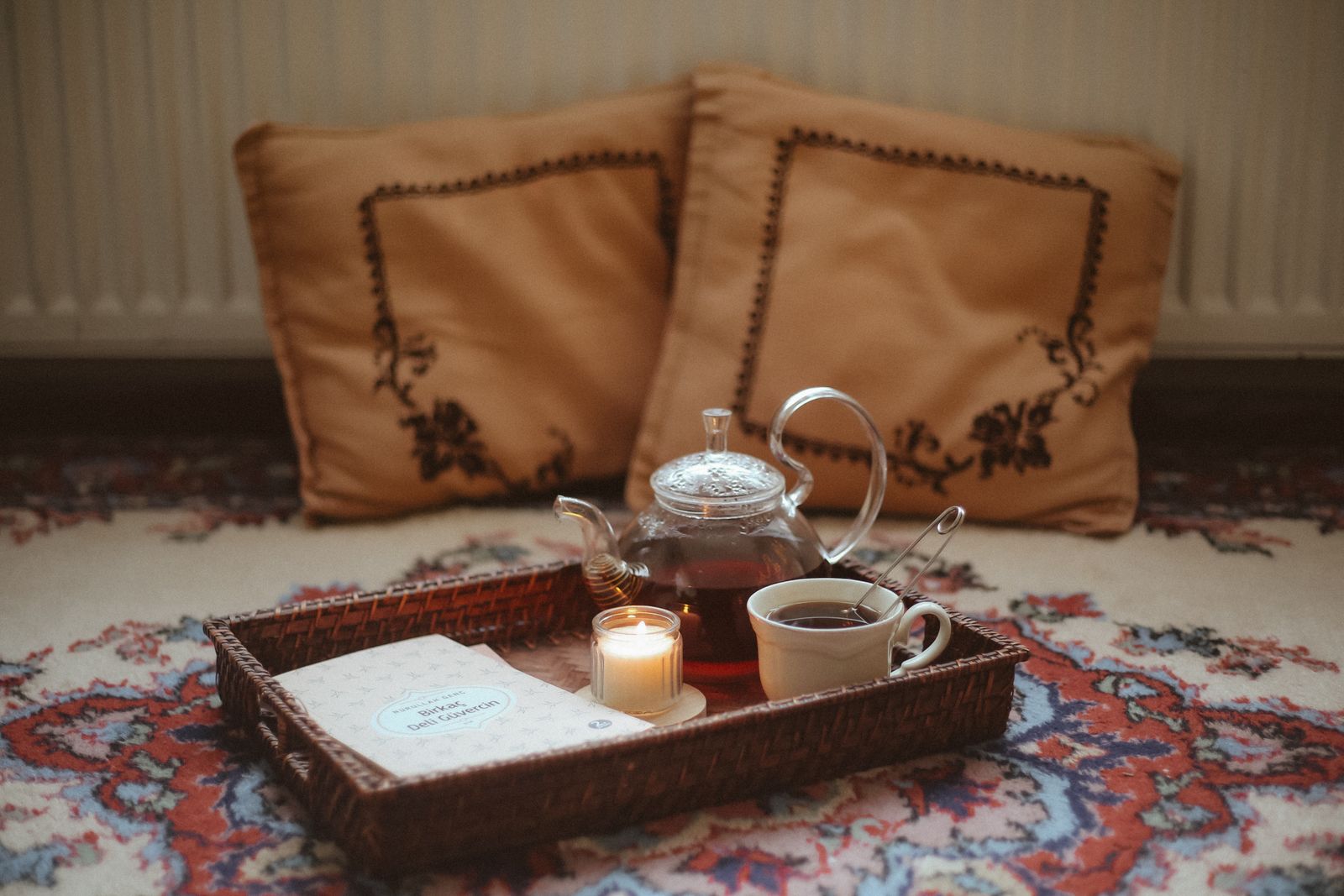
Sangha (pronounced SUNG-ha) is a Sanskrit and Pali word meaning community or assembly. In Buddhism it refers to the community of people who practise together, and it’s considered so important that it’s one of the Three Jewels, alongside the Buddha (the teacher) and the Dharma (the teaching).
That’s the short answer, if that’s all you came for. :)
But I’d like to tell you why I think it’s the most underrated idea in the whole of meditation, and share something slightly embarrassing about my own practice that took me years to admit.
Where the word comes from
In the earliest Buddhist texts, sangha referred specifically to the community of ordained monks and nuns. Over time, and particularly as practice spread westward, it came to include everyone practising together: the fourfold sangha of monks, nuns, laymen and laywomen.
The Three Jewels are the three things a Buddhist traditionally takes refuge in:
- Buddha: the teacher, or the awakened nature in each of us
- Dharma: the teaching, the path itself
- Sangha: the community who walk it with you
What strikes me about that list is that community isn’t an optional extra. It’s not “the teaching, the path, and also it’s nice to have friends.” It sits equal with the teacher and the teaching. Someone worked out a very long time ago that you cannot really do this alone.
Thich Nhat Hanh, who did more than anyone to bring sangha into modern practice, put it memorably: “The next Buddha may be a Sangha.” He meant that the awakening our era needs may not arrive as one remarkable individual, but as a community learning to live together well.
My slightly embarrassing confession
Here’s the part I find humbling to write.
I’ve been teaching mindfulness for over twenty years. I’ve written books about it, Mindfulness For Dummies, among others. I’ve studied with some of the best teachers alive. I’ve stood in front of rooms full of people and taught them how to build a daily practice.
And for years, I could not maintain a daily practice myself.
Not for lack of trying. I tried everything I tell other people to try. I made it small. I attached it to a habit. I set reminders. I kept a log. I understood the science of habit formation well enough to write about it. I’d manage a good run of a few weeks, then life would get busy, and I’d look up a month later having barely sat at all.
It’s an odd thing to carry as a meditation teacher, the quiet gap between what you teach and what you actually do.
Then in 2020 I started the Daily Mindfulness Club: a live sit, every single morning, with whoever turned up.
I have meditated every single day since.
Not because I finally found the right technique. I already knew every technique. Not because I discovered new willpower. I’m fairly sure I have the same amount as before. It was because at 7:30 each morning there were people waiting, and I’d said I’d be there.
That’s it. That’s the whole mechanism. And having now heard the same thing from many members of the group, I’m confident it isn’t just me.
Why practising together works
I’ve thought about this a great deal, and I think three things are going on.
1. Somebody notices. This is the big one. An app doesn’t mind if you disappear for three weeks. A recording is endlessly, infinitely patient, which sounds kind, and is actually the problem. When there are people, there’s a gentle, non-judgemental expectation. Nobody tells you off. But you’re expected, and it turns out that being mildly expected somewhere is the most powerful habit-builder I’ve ever encountered.
2. The decision gets made for you. Meditating alone means deciding, every single day, when and whether to do it. That’s a small negotiation you have to win 365 times a year, usually against a version of yourself who is tired and busy. A sangha removes the negotiation. It’s at 7:30. You don’t decide; you just show up.
3. There’s something in the room. I’m wary of sounding mystical, so let me put it plainly: sitting with others simply feels different. The quality of attention is different. On mornings when I’m restless and would certainly have cut a solo sit short, the presence of other people settles me. Whether that’s some form of co-regulation or just plain social pressure, I don’t much mind. It works.
There’s a fourth thing too, quieter than the others: you stop feeling odd. Everyone’s mind wanders. Everyone has mornings when it’s all a bit rubbish. You only really believe that when you hear other people say it out loud.
What the research actually says
I’ve just told you a story about myself, and stories are the weakest form of evidence there is. So let me be straight about what the science does and doesn’t support, including where it’s thinner than I’d like.
People really do stop practising alone
This much is well established. A 2023 systematic review and meta-analysis in Behaviour Research and Therapy pooled 70 randomised controlled trials covering 9,258 people using mindfulness apps, and found a weighted attrition rate of 24.7% (Linardon et al., 2023).
And here’s the thing worth understanding about that number: it comes from trials, where people were recruited, screened, sometimes paid, and knew researchers were watching. Those are unusually favourable conditions. Real-world use outside a study is considerably worse. Whatever the exact figure, the direction is not in dispute: most people who start meditating with an app stop.
Specifying when is one of the most reliable findings in psychology
If you take one evidence-based action from this article, make it this one.
Forming an implementation intention (deciding in advance the when, where and how of a behaviour, rather than merely intending to do it) has a large and remarkably consistent effect. A landmark meta-analysis of 94 independent tests found a medium-to-large effect on goal attainment, d = .65 (Gollwitzer & Sheeran, 2006).
“I’ll meditate more” fails. “I’ll sit at 7:30 after the kettle goes on” works far better.
Notice what a sangha does here: it hands you an implementation intention. The when is fixed, the where is fixed, and you didn’t have to have the discipline to construct it yourself. I think this is a substantial part of why groups work, and it’s the least mystical explanation available.
Working alongside others changes effort: in exercise, at least
There’s a well-replicated finding called the Köhler effect: people working as part of a pair or group, particularly the less capable member, put in more effort than they do alone. In one study, people doing plank exercises with a partner persisted significantly longer than those exercising alone (Feltz et al., 2011).
Honest caveat: that’s exercise research, mostly using virtual partners in lab conditions. Whether it transfers to sitting quietly with your eyes closed genuinely hasn’t been established. I find it suggestive, not conclusive.
The broader physical activity literature does consistently favour groups. Community group programmes tend to show markedly better long-term adherence than unsupported home-based ones, but again, that’s exercise, and meditation is a different animal.
The meditation-specific evidence is thinner than you’d hope
Here’s where I have to be careful, because this is the exact claim I’d most like to be true.
The best-aimed study I could find followed 96 people through an eight-week mindfulness course and looked at what predicted whether they kept practising afterwards. Retreat attendance and instructor- and group-related factors together predicted post-course adherence, explaining about 21% of the variance (Canby et al., 2021).
But the authors are appropriately cautious, and so should I be: when examined alongside other predictors, those social factors did not emerge as unique predictors. The variables were highly intercorrelated. So it’s supportive, not decisive. And it’s 96 people.
More broadly, researchers have noted it remains genuinely unclear how solitary versus group practice affects the experience, particularly for beginners. Nobody has run the study I’d most like to see: take a few hundred beginners, randomly assign half to a daily group sit and half to the identical recorded meditation alone, and follow them for a year.
Until someone does that, anyone telling you the science proves group meditation works is going beyond the evidence.
A statistic I’m deliberately not using
You’ll see it claimed everywhere that people with an accountability partner achieve 76% of their goals versus 43% without. It’s usually traced to a study at Dominican University.
I’ve left it out, because as far as I can tell it was presented at a conference and never published in a peer-reviewed journal. It may well be true. But it gets quoted with a confidence its evidence base doesn’t support, and I’d rather give you four findings I can stand behind than five where one is shaky.
So where does that leave us?
Honestly, here:
- That people stop practising alone is well evidenced.
- That fixing the when and where helps a lot is very well evidenced.
- That groups increase effort and adherence is well evidenced in exercise, and plausible but under-tested in meditation.
- That a daily sangha keeps you practising is my strong experience, echoed by many members, and consistent with the above, but not something I can point at a definitive trial for.
I’d rather tell you that than pretend otherwise. Try it for a fortnight and gather your own data. :)
What a sangha looks like today
Traditionally you’d walk to a temple. Today a sangha can be a good many things:
- A local Buddhist centre or meditation group: still the most traditional form, and lovely if you have one nearby.
- An online sangha: Plum Village’s community runs online sanghas in several languages, many of them daily and free.
- A free live sit: Insight Timer hosts free live sessions around the clock, and some centres stream a daily sit on YouTube.
- A small paid group: such as the one I run, where the commitment tends to be firmer because there’s some skin in the game.
- Two friends and a standing appointment. Honestly. A sangha does not require robes, a website, or a bell. Two people who sit together every Tuesday is a sangha.
If you take nothing else from this: the form matters far less than the regularity.
How to find one that suits you
A few things I’d look for, having tried most versions:
Same time, every time. A group that meets at an unpredictable hour is a group you’ll drift from. The fixed slot is doing much of the work.
Small enough to be noticed. A thousand people on a livestream is a broadcast, not a sangha. You want somewhere your absence would register.
A real person guiding. Not because recordings are bad, but because a live teacher responds to how the room actually is that morning, and because it’s much harder to skip on a human than on a file.
A tradition you’re comfortable in. Some sanghas are explicitly Buddhist, with chanting and bows. Others are entirely secular. Neither is better; they just suit different people. Try before you settle.
Kindness over intensity. Be a bit wary of any group that makes you feel you’re not doing enough. That’s not what this is for.
The one I run, since it would be strange not to mention it
I should be upfront: the Daily Mindfulness Club is mine, so do apply the appropriate pinch of salt.
It’s a live sit every weekday morning at 7:30am UK time, guided by me, with a small friendly group. It’s rooted in ACT (so it’s about living toward what matters to you, not only feeling calm) and you get the recording if 7:30 isn’t your hour. There’s a sit at the weekend too.
I’m not going to tell you it’s the best sangha in the world. Plum Village has a few decades and several monasteries on me, and their online sanghas cost nothing. If you want something free and traditional, start there and I’ll be glad you did.
What I will tell you is the honest thing I opened with: I wrote the books, and I still couldn’t practise daily until I had a group. If you’ve been trying to do this alone and it keeps slipping, the missing piece probably isn’t more discipline. It’s other people.
Come and sit with us: 7 days free
Just turn up one morning and see how it feels.
Frequently asked questions
What does sangha mean? Community or assembly. In Buddhism it means the community of people practising together, and it’s one of the Three Jewels alongside the Buddha and the Dharma.
How do you pronounce sangha? SUNG-ha: two syllables, with a soft “g”. You’ll also hear SANG-ga.
Do you have to be Buddhist to join a sangha? No. Many sanghas welcome anyone, and plenty of modern groups are entirely secular. Do check the tradition of a particular group, as they vary a lot in how religious they are.
What is an online sangha? A community that meets by video call rather than in person. Plumline hosts many in the Plum Village tradition, several of them daily and free.
Can I find a sangha near me? Often, yes. Search for a local Buddhist centre, Zen centre or meditation group. If nothing’s nearby, an online sangha works genuinely well; I’d have said otherwise before 2020, and I was wrong.
Why is sangha one of the Three Jewels? Because the tradition recognised early on that practice is extremely hard to sustain alone. Community isn’t a nice extra. It’s treated as essential as the teacher and the teaching.
In short
A sangha is simply the people you practise with.
It sounds like the least important of the Three Jewels. In my experience it’s the one that makes the other two possible, and I say that as someone who had the teacher and the teaching, wrote books about both, and still couldn’t sit every day until other people were sitting with me. :)
If you’d like to find one, I’ve put together an honest list of online meditation classes with a live teacher, free options included. I also wrote about why community matters so much for practice a while back, and there’s a lovely old story about the proud wave that says it better than I can.