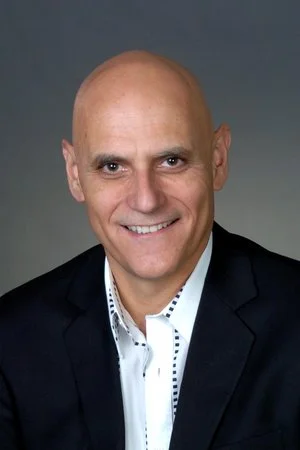
Professor Steven Hayes on ACT
The short version: in 2012 I spent 75 minutes on the phone with Steven Hayes, who founded Acceptance and Commitment Therapy. He talked about developing panic disorder as a young academic, about the tinnitus that brought him to suicidal thoughts and then stopped being a problem within a week, and about why he thinks the human brain has no delete button. The full interview, audio and transcript are all below.
▶️ Watch the interview:
🎧 Prefer to listen? Here's the original audio:
Why this recording matters
I recorded this for my old Mindfulness Radio Show in the summer of 2012. You can date it from the conversation itself: we talk about the London Olympics, which were happening at the time, and Hayes refers to the Aurora cinema shooting, which had just happened.
That timing is what makes it worth listening to now. This was seven years before A Liberated Mind and four years before his TEDx talk. ACT was not yet the household name in therapy circles it has since become. He is talking about it as something still being argued over, still being built.
The audio is a phone call from 2012 and it sounds like one. I have cleaned it up as best I can. It is not perfect, and I decided that mattered less than the content.
What Steven Hayes says in this interview
He built ACT because he was in trouble himself
The origin of ACT is not an academic one. Hayes developed panic disorder shortly after starting his first faculty job.
“I applied the methods that I’d been taught and ones I knew and, to me it felt like spitting into a hurricane. Didn’t seem to really do very much.”
So he went back to older ideas, combined them with what he knew, and started building. He is candid that his own recovery was slow: panic took him “probably eight years to really fully walk out of”, and his last panic attack was in 1995, well into the ACT work.
The tinnitus story
This is the part of the interview I still think about. Hayes describes developing severe tinnitus, a degenerative case that got louder over time.
“I actually caught myself having suicidal thoughts. If I shoot myself, I’ll stop hearing this noise.”
It took him two years, he says, before it occurred to him to apply his own life’s work to it. When he did, it was handled within a week, and had stayed handled for the eight or nine years up to our conversation.
What he actually did was small and repeatable. Each time he noticed the chattering, catastrophising commentary, he would thank his mind for trying to help and respectfully decline the invitation, then turn his attention to the next thing that actually mattered: his kids, an article, his wife.
He is careful about the claim. The ringing did not stop. It is there twenty-four hours a day. What changed was that it stopped being a problem.
“They don’t really stop ringing, but it’s as if they stop ringing.”
There is no delete button
Hayes is blunt about why trying to get rid of difficult thoughts and feelings backfires.
“Maybe there’s no delete button in your brain. There’s no eraser on this mental chalkboard. You’re a historical creature.”
He describes the trap precisely: you try not to have a difficult thought, which is the normal and reasonable thing to do, and the likelihood of having it more often, more intensely and in more places goes up. With panic, that becomes “anxiously checking to see if anxiety goes away”, which he calls a system from hell.
His metaphor for the way out is quicksand. Struggling sinks you. Lying flat on the surface does not.
The milk exercise
He gives a complete, thirty-second defusion technique you can try while listening. Take a plain word, say milk, and repeat it out loud, fast, for thirty seconds.
“We know thirty seconds is the sweet spot.”
The meaning falls away. You start hearing it as a sound. You notice that talking is a muscular activity, because your jaw gets tired. Then you do the same with a word that actually hurts: loser, unlovable.
The point is not that words are meaningless. It is that the meaning is something added to what is, underneath, just an activity of producing a sound. He notes this comes from Titchener, one of the fathers of American psychology, and as far as he knows it was never used clinically until ACT picked it up.
The six processes, and why he wanted them short
Hayes lays out all six: defusion, acceptance, flexible attention to the now, self as perspective-taking, values, and committed action. Together, psychological flexibility.
But the more interesting part is his reasoning about length. He is explicit that ten-day silent retreats are for “the educated elite … or the very young”.
“People on the factory floor are not doing ten-day silent retreats. That’s just not gonna happen.”
So the project, as he describes it, is to find the active ingredients in contemplative practice and build shorter, simpler methods that reach everyone. He is respectful about the traditions while he does it: they are thousands of years old and “frankly, they didn’t need psychotherapists to come and give them an anointing.”
On the modern world
He and his students had been counting how many more words a person hears now than their great-great-grandfather did. Triple, quadruple, quintuple. And inside those words, he says, are horror and judgment.
“In the world that we evolved in … there was pain, but it was pain that was direct and infrequent. Now we have pain that’s constant.”
His conclusion is that skills once reserved for monks are now something everybody needs, and that this has to get “into the cultural water as much as the antidepressants are in our literal water.”
What I take from it, thirteen years on
Two things have stayed with me.
The first is how ordinary his own practice sounds. Thank the mind, decline the invitation, turn to what matters. That is not a technique that needs a cushion or an hour. It is the thing I now teach as unhooking, and hearing the founder of ACT describe using it on his own ringing ears is more persuasive than any study.
The second is the phrase I have quoted more than anything else from this conversation:
“Your life is not a problem to be solved. It’s a process to be lived.”
I have been teaching for over twenty years and I still catch myself in problem-solving mode with my own experience. That line pulls me out of it.
If you want to try the ideas rather than read about them, I built a free interactive game around the ACT metaphor of passengers on the bus, and there is more on the approach on my ACT page.
Full transcript
Read the full 75-minute interview
Lightly edited for readability. Recorded summer 2012 for the Mindfulness Radio Show.
Shamash: Hello, and welcome back to the Mindfulness Radio Show. This week we have Professor Steven Hayes. He’s author of 30 books, a researcher who’s published over 400 scientific articles, and he’s founder of what is called Acceptance and Commitment Therapy, which is a relatively modern therapy that has mindfulness as one of the key components. So thank you very much for joining us today, Professor Hayes.
Steven Hayes: Happy to be here with you.
Shamash: So my first question is, how did you actually get involved in the field of psychology?
Steven Hayes: I made that decision long, long ago when I sort of looked at my artistic and humanistic interests and scientific interests and wanted a field that could combine both. And indeed, psychology is perfect for doing that.
Shamash: And were you kind of suffering from any kind of psychological conditions yourself? Because quite often people will have something.
Steven Hayes: Well, I actually did develop a panic disorder, shortly after I started my faculty job as a young academic, more than thirty years ago. And that actually has informed my work a lot because I applied the methods that I’d been taught and ones I knew and, to me it felt like spitting into a hurricane. Didn’t seem to really do very much. And I went back to some earlier ideas and combined them with things that I knew and started trying to come up with ways forward.
And, you know, as a child of the ’60s and a person who lived on an Eastern-focused commune and so forth, there were elements inside those traditions that I thought were important. So the work on ACT really is a combination of behaviour therapy, traditional CBT, and some of these areas that frankly at that time the scientific folks hadn’t explored. But I found when I applied it to my own anxiety problems, they had a lot more traction than the methods that were there.
And now thirty years later, some of those things have become very popular. I think not just because the hippies grew up, although frankly that’s part of it. But also because increasingly the science is supportive of it, and it’s the kind of thing that has broad application for a lot of different kinds of human problems.
Shamash: So when did you first discover the concept of mindfulness or meditation?
Steven Hayes: Well, again, as a child of the sixties, everybody was reading Suzuki and Watts and people like that. It was just required reading for eighteen, nineteen, twenty year olds, not because the adults said to do it, the kids said to do it. My first exposure to mindfulness as a more rigorous form of contemplative practice was from a well-known Zen teacher in Los Angeles, who eventually went on to set up the Los Angeles Zen Center.
And then I lived on an Eastern commune run by a disciple of Paramahansa Yogananda, which is now called Self-Realization Fellowship. Some of the stuff is pretty goofy looking backwards, frankly, because Yogananda was convinced he could literally be in two places at once, which seemed pretty cool to hippies, but I’ve never actually met anybody who could be in two places at once. Hours and hours of chanting and meditating and all the rest.
But the airy-fairy stuff that comes around Eastern thinking is one thing, and the actual core of their work is another. And what we’ve done in the ACT work is expand out a little bit by taking methods that are much shorter and simpler and more focused, that go after some of the common core processes that change with contemplative practice.
These traditions are thousands of years old and frankly, they didn’t need psychotherapists to come and give them an anointing. They’re doing very well, thank you. But there is something that Western science can contribute beyond simply validating them and showing what happens to the brain when you meditate, which is to come up with techniques that are perhaps shorter and simpler, so people can be exposed to some of the benefits even without doing a ten-day silent retreat.
Mostly the educated elite will do that, or the very young. People on the factory floor are not doing ten-day silent retreats. That’s just not gonna happen. Even in the Eastern countries, that never happened. You go to Cambodia and people don’t meditate. The monks meditate. So we’ve got to find a way to broaden out the mindfulness traditions and put them into every nook and cranny, and I think that requires methodological development.
Shamash: Most people probably haven’t heard of ACT who are listening to this show. Could you give some examples of the kind of mindful exercises you would offer in ACT?
Steven Hayes: What we think mindfulness involves is four basic things. It’s a matter of what we call defusion, which is learning to watch your thoughts in such a way that they don’t automatically dominate over your own behaviour. To take a kinder, more self-accepting approach to your experiences, your feelings, memories, bodily sensations, and stop warring within. To be more flexible in what you attend to and be able to attend by choice, coming into the present moment in a way that is flexible, fluid, and voluntary. And then to contact a sense of self that is transcendent.
In the ACT model, we add two other things. Once you have that ability to open up to the world within and get yourself centred in consciousness in the now, one thing you want to do with that more flexible attention is move towards what your values are, what you really care about, and how you do that with actual behaviour. So values and committed action are the two other things we add. And all six of those, defusion, acceptance, self, now, values, and action, we call psychological flexibility.
I’ll give you an example of the defusion element. Titchener came up with this, one of the fathers of American psychology. It was never used clinically as far as I know until the ACT folks rediscovered it. We work with our clients to distil down to a single word something that really pulls at them, something quite self-critical or painful. Words like loser or unlovable. And what we do is simply sit and say them out loud fast over and over again for about thirty seconds.
Anybody listening can try that with a common noun first. The tradition has emerged, because I guess I started doing this one first, of the word milk. You say the word milk for thirty seconds out loud. At the end of thirty seconds, and we’ve actually done parametric studies, we know thirty seconds is the sweet spot, the meaning of the word falls away and other things show up. You begin to hear the word as a sound for the first time. You realise that talking is a muscular activity, which most of us don’t notice because we keep saying different words, so our muscles never get exhausted. Say milk for thirty seconds and by the end your jaw is going to have a hard time moving.
The point of this is not that words have no meaning. The point is to realise that the meaning is added to what, after all, is simply an activity of producing a sound. If you’re thinking “I’m a bad boy,” you may have heard that from your father, and now you’re forty years old having it rumble around in the background, pushing you around, really for not much more of a reason than the sound of the word milk causes you to think of white, creamy, cold stuff.
You can back up and just realise you’re talking. Just see the words as words. Call that defusion. Any meditator knows what I’m talking about. But having a thing you can do in thirty seconds can take people, as they say, on the factory floor. There is a choice here of taking just the littlest step back and watching that process. Into the gap between you, the noticer, and the mind being noticed, freedom can slip in.
Shamash: So the purpose of that exercise is to help people see that thoughts are just thoughts and not necessarily facts?
Steven Hayes: Exactly. And it’s not a matter of changing the feelings or not being upset about the word, although frankly that does happen. This word repetition exercise has been looked at in about ten studies now, and it does quite well, better than trying to argue yourself out of a word and convince yourself of its irrationality, or distracting yourself.
But really the purpose is simply to bring yourself into a different relationship with your thoughts. If a person’s thinking “I’m bad,” they can make a whole list of all the reasons they’re bad, all the betrayals or failures. And if you try to argue yourself into feeling better about yourself, your mind will out-argue you. You never get the peace of mind. You’re just trying to live inside an argument inside your head.
What people see very quickly is that you are simply thinking. And then you can pick and choose which thoughts to follow based on their workability, not their literal truth. To figure out whether you’re really bad is just not relevant. But how is that working for you?
Shamash: So it seems all these exercises are about objectifying the thoughts, so they don’t become part of who we are?
Steven Hayes: When you do them as objects, it’s easy, because we have such a repertoire of looking at objects and not getting entangled with them. But you wouldn’t have to do it as an object. If you’re having a thought, feeling, memory, or bodily sensation, label it inside your awareness of it. We know from fMRI imaging studies the brain lights up entirely differently when you have a thought like “I’m bad” versus “I’m having the thought that I’m bad.”
After all, what you really noticed to be true to your experience is that you noticed you were having a thought. You didn’t literally notice being bad. You noticed you were evaluating yourself. When you disappear into the evaluative labels, you’ve turned over your behaviour to whatever your mental programming is, and that’s not a safe place to be. All of us, through the media and our siblings and life and pain, have a ridiculous amount of programming that is harmful to us. So you better learn to put your mind on a leash or it’s gonna have you on a leash.
Shamash: What’s the evidence for ACT being used for depression, and how does it compare to MBCT?
Steven Hayes: It’s quite good. It’s on the list at the American Psychological Association as an empirically supported treatment for depression. It’s even stronger for chronic pain. But if you pick just the areas with at least two successful randomised trials, you’d have to add psychosis, mixed anxiety disorders, OCD, obesity, exercise, diabetes, managing chronic disease, drug abuse.
It turns out it’s drilling down to a common core process involved in human suffering and inflexibility. If you’ve always done what you’ve always done, you’ll always get what you’ve always got. You’re never going to get something different unless you do something different.
So ACT is really not trying to correct anything, subtract anything, erase anything. It’s trying to take a stuck system, free it up, and get it oriented towards what works.
Most of those syndromes are really kind of nonsense, frankly. I think the scientific evidence for the true worth of syndromes is almost nil. Sixty, seventy years into trying to make that system work, we’ve never found a disease yet. That’s the whole point of creating syndromes. So instead we’re doing more like what happened with cancer when they bogged down: they stopped botanising cancers and labelling every different kind, and dug down to figure out how oncogenes are turned on and off. ACT is out of that tradition. What are the common core basic processes that liberate or confine human beings?
Shamash: In ACT, how do you teach the concept of acceptance?
Steven Hayes: Early on when I was working on ACT, although I’d come out of an Eastern religious background, I was cautious about using the word mindfulness, to be frank. I saw such conflict. Literally, monks have gone to war with each other over whose definition of mindfulness is right. There’s hundreds of traditions going back thousands of years, and all this quarrelling. As the West has got involved, I think they’ve focused more on the practice, and very wisely. People like Jon Kabat-Zinn, and the important work with mindfulness-based cognitive therapy, which Jon helped develop with Mark Williams and Zindel and the rest. We stripped out the spiritual wraparounds and tried to drill down to the methods, and that’s allowed them to penetrate into healthcare and schools and industry.
The single most common thing people ask for when they come in is to get rid of thoughts, feelings, memories, and bodily sensations. I’ve never had a client come in and say “my responding’s not flexible enough” or “I need to orient towards my values.” That’s not what people are saying. They’re saying “I’ve got this panic disorder” or “I’ve got this horrible depression I can’t get rid of.”
Well, why is that a problem? Because you’re an inch away from doing things that will actually entangle you with, and actually build, the frequency and intensity of these very things. If you try really hard not to have a difficult thought because it’s painful, which is just a normal, common sense, reasonable thing to do, the likelihood of you having more of that thought, in more places, more intensively, has now gone up hugely. Because these are ironic processes.
Every panic disorder person I’ve ever met had a panic attack, and then what people do is try to avoid being panicky. But how are you going to know it’s less likely? You have to check to see if it’s there. So it’s this process of anxiously checking to see if anxiety goes away, because if it didn’t it would be really awful, so awful that it would be something you should be anxious about. And this is a system from hell.
It’s like a person getting caught in quicksand thinking they’re going to struggle their way out, and they just sink in. What they need to do, metaphorically, is lay out flat on the surface of the mud, and you’re not going to sink. In the same way, acceptance and mindfulness teaches people to lay out flat on their own emotions and really feel what they feel like.
We come in with a phase we call creative hopelessness and basically say, maybe trying to get rid of it is the problem. Maybe there’s no delete button in your brain. There’s no eraser on this mental chalkboard. You’re a historical creature. You’ve been adding and adding. So what are you going to do if it has to go away, and yet any attempt to make it go away makes more of it?
When we get to mindfulness and acceptance, we want acceptance to be what the etymology of the word is, which is to receive a gift that’s offered. Acceptance is not a secret new eraser or delete button. The human nervous system has no delete button. So what are you going to do with yourself as a historical creature when you’ve had a lot of scary, painful things? You’ve got to learn to change your relationship to those things and learn to carry them the way you carry keys in your back pocket.
If I can use an example, I have tinnitus really badly. Been to one too many Who concerts, now that I’m sixty plus. When it crept up about ten years ago and I started struggling with it, I’m hearing this thing ring morning and night, twenty-four seven, and it’s getting louder and louder. That’s a degenerative process. And I actually caught myself having suicidal thoughts. If I shoot myself, I’ll stop hearing this noise.
It took maybe two years of this before it finally occurred to me to apply my own life’s work to it. And when I did, within a week it was handled. And it’s now eight, nine years later, and it’s one hundred percent handled. We’ve done randomised trials of ACT for tinnitus, and it works for other people.
Are my ears ringing? Yes. The last time I noticed they were ringing was about a week ago, but I’m talking to you mentioning it, so now they’re ringing. Were they ringing in between? Yes, of course. Twenty-four seven, all the time. But if you one hundred percent don’t care, you’re just not interested in that any more. They don’t really stop ringing, but it’s as if they stop ringing.
Shamash: That’s a real practical example. May I ask, what did you do in that one week that helped shift it?
Steven Hayes: By now I’m focusing on my ears over and over, each time thinking, “When is it going to go away? This is really terrible, this is getting worse. Am I going to have to listen to this for the rest of my life? There’s no cure.” Very chattery, evaluative, future-oriented, comparative.
What I did was, each time I noticed that, I would thank my mind for the attempt to help solve this problem, and respectfully decline its invitation. Sort of like, “I appreciate you trying to help me here, Mr Mind, but you can’t help here, and I’m going to take care of it. So thank you very much.”
And the taking care of it is, in the next moment, to kind of swallow it, bring it in, like inhaling. Okay, the noise is there, all this chatter is there, get with that moment, and then direct your attention towards the next thing. Playing with your kids, working on an article, watching the TV, kissing your wife. A whole lot of things other than the freaking ringing in your ears.
One reason it took a week is I’ve worked on this for a lifetime in lots of other areas. Panic took me probably eight years to really fully walk out of. And even now, I may get a panic attack. My last one was in 1995, well into the ACT work, so I’ve learned never to say never. If I have a panic attack, I have a panic attack. You can’t make me care about it, and you can’t make me turn away from it.
The mind demands this mode of problem-solving. And there’s another mode, which is description and appreciation. It’s the one you find in contemplative practice, and it’s more flexible and open. Not everything is a problem. Your life is not a problem to be solved. It’s a process to be lived.
Shamash: And you said it’s not that the ringing stopped?
Steven Hayes: It’s raining now more than ever. Because I’m talking about it. So what? What difference does that make?
Being able to let go, putting your mind on a leash, has gone from something that’s helpful, something that monks do, into something that everybody needs. Because we are now, for the first time ever in the history of the planet, exposing people to a constant diet of horror and judgment in the form of our computer screens and our television screens and our modern media culture, without any attempt to create a different mode of mind to handle that.
My students and I have been figuring out how many more words you’ve heard versus your great-great-grandfather. Just how many words per year. And it’s triple, quadruple, quintuple. And inside those words and images are horror or judgment or pain. Somebody goes into a theatre and shoots seventy people and kills a dozen, like what happened in Aurora. We’ll know about it in minutes.
In the world that we evolved in, it wasn’t like that. There was pain, but it was pain that was direct and infrequent. Now we have pain that’s constant. So we better learn how to be with pain in a different way, or it’s just going to consume us. We cannot just numb ourselves into solving this problem we’ve created.
The monks and meditators have mapped out a good chunk of what everyday folks need now to learn. Which is why we have to get it on the factory floor. It’s going to have to be something that’s as much in the water as the antidepressants are now in the water.
Shamash: How do you balance values and being in the present moment? In some ways they seem to be opposites.
Steven Hayes: Well, all the mindfulness traditions have values in there, right? Action, things of that kind.
Shamash: What excites you most about where this is going?
Steven Hayes: The ACT work is morphing into a real focus on process and procedures that can go almost anywhere. It’s going into organisational consulting, business and industry, coaching. You’re there at the Olympics in the UK. One of the major ACT players there, Frank Bond at the University of London, an organisational guy who also got into sports psychology, couldn’t come to our meeting because the UK Olympic Committee said he had to stay and help with the Olympics. We’ve shown some of these methods help people be better chess players, in actual randomised trials.
When you do that, it’s no longer a matter of brand name. It doesn’t have that ego-based Steve Hayes ACT, blah blah blah. It gets down to these little kernels that can be put into homes and schools, churches and communities, human lives, relationships, play, recreation, art. Let’s get the scientists in there not as kings of the world wagging their fingers at others, but as participants in a larger human community, seeing what we can together do to create a more loving, open society.
Frank did a study where he brought an ACT protocol into a stock brokerage. The stockbrokers sold a lot more stocks, and they were happier. And they started having things like family day at the brokerage, bringing their kids to work.
We can do better than this harsh, busy, chattery, judgmental, avoidant, indulgent culture we’ve been creating inside the mindlessness of this crass commercialism, with the promise that it’ll relieve your pain with yet another product. It’s going to take all of us working together. That’s what excites me. I can see the day coming where some of these ancient traditions, the mindfulness work, and some of the new work we’ve been able to develop, evolve our culture in a way that’s saner, more peaceful, more compassionate, more supportive of human beings.
Shamash: That’s a really nice way to end. I was going to ask if you had two or three practical steps for people for living a life of greater wellbeing.
Steven Hayes: My book, Get Out of Your Mind and Into Your Life, if people are interested. It’s very cheap. We’ve done randomised trials on it. There’s also a worldwide community of people reading ACT self-help books called ACT for the Public. It costs nothing. You can be part of a worldwide conversation asking how does this apply, I tried this, it didn’t work, what else should I do.
There are some other really good self-help books out there. The Happiness Trap, for example, by Russ Harris. He’s an Australian physician I really like. And you can go to contextualpsychology.org and see a whole lot of stuff there. In the UK you have 1,600 members of a special interest group for ACT in the British Association of Behavioural and Cognitive Therapy. So almost anywhere you go worldwide there are therapists and people doing this work who can support people interested in exploring it. It doesn’t have to be done with great expense. You can explore it quite easily with just a few dollars and a few web clicks.
Shamash: It’s a fabulous book. I didn’t know about ACT for the Public, so I’ll check that out. And I’ve heard of The Happiness Trap. I wish you the best of luck as you continue to do that.
Steven Hayes: Thank you, and thanks for the opportunity just to connect.
Where to go next
If this is your first encounter with ACT, the gentlest way in is to play with it rather than read about it. I built a free browser game around the ACT metaphor of passengers on the bus, where your difficult thoughts are passengers and you’re the driver. It takes about ten minutes.
There’s also my ACT page, and if you’d like the ideas in book form I wrote The Little Book of ACT.
And if you want to build the noticing muscle that all of this rests on, I guide a live meditation every weekday morning at 7.30am UK time in the Daily Mindfulness Club. Your first 7 days are free. :)