How to Become a Meditation Teacher
To become a meditation teacher you need three things: a personal practice of your own, a good quality training that teaches you to guide others safely, and a realistic plan for finding the people you want to teach. Accreditation matters in some settings and barely at all in others, which surprises people. There is no legal qualification required in most countries, so the real question is not “am I allowed?” but “am I any good, and can I do this without causing harm?”
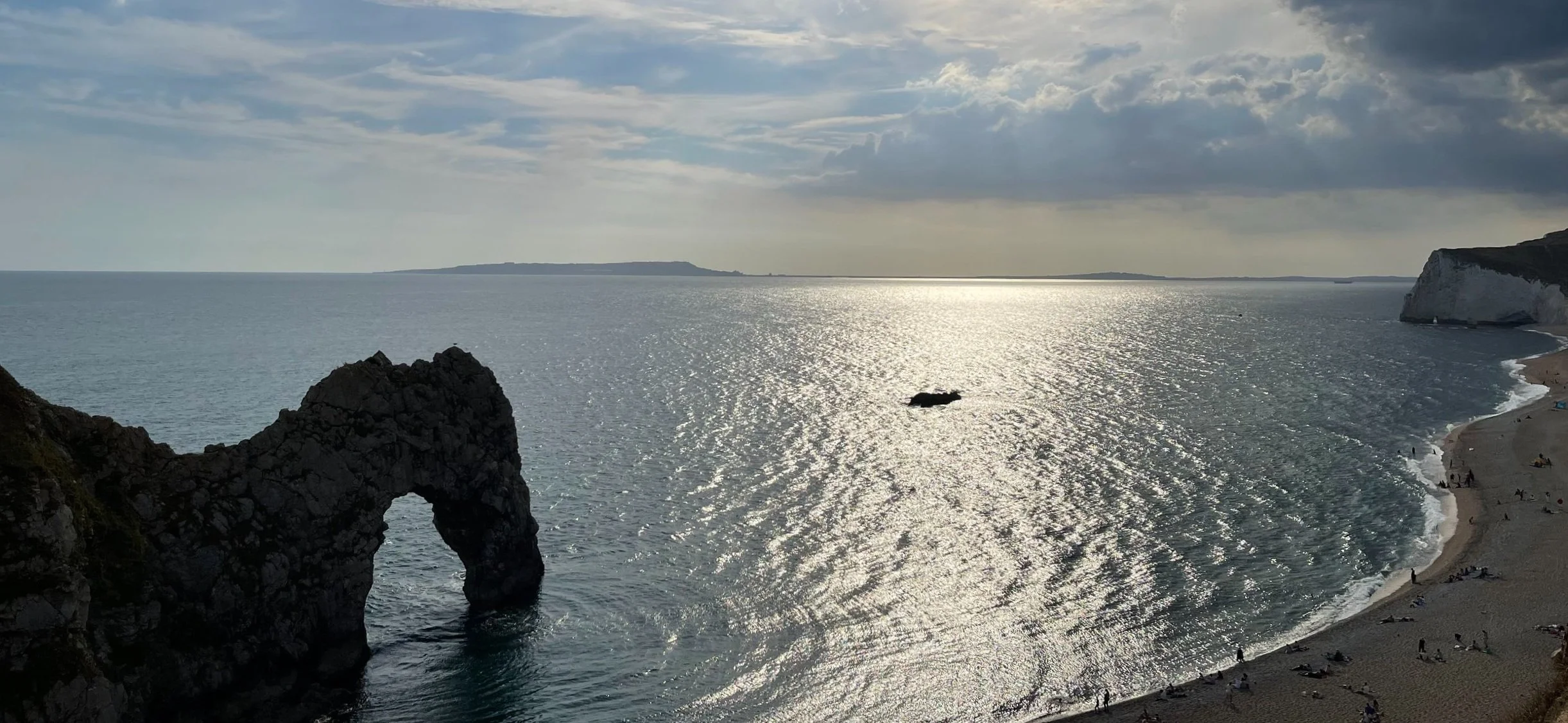 Shot in Dorset, UK (c) Shamash Alidina
I have been asked this question for well over a decade, and I have trained more than 500 teachers in over 30 countries since 2013. So rather than give you the tidy version, here is what I actually think, including the parts that are less flattering to my own industry.
How I ended up training teachers at all
I did not set out to do this.
After Mindfulness For Dummies came out and started selling around the world, people began contacting me wanting to learn to teach mindfulness from me. One of them worked in a prison in Manchester. He insisted I could train him online rather than in person.
I was doubtful. This was back when nobody was really offering mindfulness teacher training online, and I assumed something essential would be lost without a room and a group. He was insistent, so I gave it a go.
Working through the programme with him week by week, I could see how well it was going. It genuinely deepened his understanding. We had great conversations, a real connection, and it worked far better than I expected. That was the moment I realised the demand was there and the format was not the obstacle I had assumed it was.
He went on to offer mindfulness and resilience training to prison officers, not just in Manchester but across the UK, and became a strong advocate for it.
Everything I now teach started with one sceptical experiment and one person who would not take no for an answer.
Do you actually need a formal qualification to be a meditation teacher?
Honestly? In most places, no. Anyone can call themselves a meditation teacher and probably not break any law. They may not even have their own practice.
But “not illegal” is a low bar, and there are good reasons not to wing it:
- You can do real harm. This is the one I care most about. More on it below.
- Insurance. A recognised certification is usually what lets you get professional indemnity cover, and you want that.
- Support. With no training you have no teacher and no community to turn to when something difficult comes up in a session. Something difficult will come up in a session.
- Quality. Most of the common beginner errors are invisible to you until an experienced teacher points them out.
So the qualification is not the point. The competence is the point, and a good training is simply the most reliable way to get it.
Does accreditation actually matter?
This is where I disagree with a lot of the marketing you will read, including some of my own industry’s.
Whether you are accredited is not the most important thing. What matters far more is how you intend to use the training.
If you are already a qualified professional, say a business coach, and you want to bring some mindfulness into your existing work, you do not need special accreditation. You need the skills to offer it safely and kindly. That is it.
If you are planning to work in psychological services, mental health services, or anything touching on people’s health, that is where the right accreditation genuinely matters, and you should not cut that corner.
As I only half joke:
According to some of the regulations, the Dalai Lama would not be allowed to teach mindfulness.
That cannot be right. Teaching well is not about jumping through a particular set of hoops. It is a balance of experience, wisdom, knowledge, and honest awareness of who you are teaching.
How do you teach meditation safely?
This is the part I am genuinely passionate about, and the part most “become a meditation teacher” articles skip entirely.
If you are going to share mindfulness with other people, you have to do it safely and you have to do it kindly. Push people into it and there will be a backlash. At best you put them off meditation for years. At worst you affect their mental health.
This is not a hypothetical worry. In a 2021 study published in Clinical Psychological Science, Willoughby Britton and colleagues interviewed 96 people who had completed 8-week mindfulness-based programmes using a purpose-built 44-item interview. 83% reported at least one meditation-related side effect, 58% reported effects with a negative quality to them, and 37% reported effects that had some negative impact on their functioning. Lasting negative effects showed up in roughly 6 to 14% (Britton et al., 2021).
Two caveats worth stating, because context matters and I do not want to scaremonger. The sample is small and drawn from structured clinical-style programmes, and the researchers themselves noted the rates were broadly comparable to those seen in other psychological treatments. Meditation is not uniquely dangerous. But it is not inert either, and teaching it as though it were is the mistake.
In practice this means: never force anyone. If someone is dealing with depression or moderate to severe mental health challenges, it needs to be handled sensitively and skilfully, and sometimes it means referring them on rather than teaching them. Whether or not you hold an accreditation, your training has to be good enough that you can tell the difference.
How long should meditation teacher training be?
I worked this out the slow way.
Some programmes try to do it in a week or two. That is too intensive. You cannot absorb it, and you get no chance to practise anything before it is over. At the other extreme, you do not need years to learn to teach mindfulness well.
For my trainings, three months turned out to be the sweet spot. It is long enough to learn something, practise it week by week with real people, and get feedback from me on what you actually did. The feedback loop is the bit that does the work, and a short course has no room for one.
How do you choose the right meditation teacher training?
 Muswell Hill, UK - (c) Shamash Alidina
With the popularity of mindfulness there has been an explosion of teacher training programmes, which makes choosing genuinely confusing.
The short version: work out who you want to teach, check you will be guiding real people during the training and not just watching, and ask whether you can get insured at the end of it. Those three answers rule out most of the list.
I have written the long version separately, including what the clinical route actually asks of you and the one thing that decides whether trained people ever teach at all. It is here: meditation teacher training, and how to choose yours.
Can you make a living as a meditation teacher?
Yes. I have done it. But the honest answer is more conditional than most people want to hear, and it has very little to do with your qualification.
It depends on how much time and effort you are willing to put into sharing your services, and on the contacts you already have.
- If you are inside a large organisation that respects you and wants mindfulness rolled out to staff, you could be making a living almost immediately.
- If you already have access to clients, as a coach or therapist for example, it is much easier.
- If you are starting from scratch with no contacts and no organisation behind you, you will not go full-time straight away. It will be gradual.
That last one was me. I started with one day a week, then two, and expanded to full-time over time. It has been my full-time living for more than fifteen years now and I could not be happier with the lifestyle. But it took work and dedication, exactly like any other business.
Nobody hands you a living because you finished a course. The training gives you the competence. The living comes from the slower work of finding the people who need what you can now do.
What is the difference between a meditation teacher, instructor and coach?
 Surrey, UK - (c) Shamash Alidina
Practically speaking, the trainings are much the same. The main difference is that meditation coach training tends to emphasise one-to-one work, while most teacher trainings focus on groups.
In the Teach Mindfulness programme we cover both, so you can call yourself a mindfulness coach or a mindfulness teacher.
Should you train in mindfulness specifically, or another form of meditation?
Worth deciding early. Mindfulness is currently the most searched-for form of meditation by a wide margin, so mindfulness teacher training is the most transferable option.
If you want to teach mindfulness and other forms, choose a flexible training so you can also include visualisation, or write your own guided meditations.
Pros and cons of MBSR and MBCT trainings
If you like the idea of delivering the same well-researched 8-week programme repeatedly and never changing the curriculum, an MBSR or MBCT teacher training may suit you better than mine. They are excellent programmes with a serious evidence base.
The trade-offs: training is usually longer and more expensive, there are often ongoing costs, and retreat attendance is frequently required. And creativity in how you guide is generally discouraged, because the syllabus is fixed by design.
If you do not want to teach mindfulness at all, find the specific tradition you want to offer and train in that.
FAQ

Can teaching meditation be a full-time job?
Yes, as it is for me. Whether it becomes one depends far more on your contacts and your willingness to market yourself honestly than on your certificate.
Is a yoga teacher also a meditation teacher?
Some are qualified in both, but not automatically. We have had many yoga teachers come through the programme, usually because they want the confidence to guide meditation properly rather than as an add-on to a class.
What other forms of meditation are there?
Plenty. Vipassana, metta (loving kindness), kundalini, transcendental meditation, visualisation practices and many more.
How important is personal practice?
Vital, and not optional. A good meditation teacher wants to develop their own practice, not just talk about it.
When you guide others, people can tell whether the instruction is coming from somewhere real. You do not need to be enlightened, but you do need to be practising. If you are not sure how much is enough, I have written separately on how long you should meditate.
Do I need to teach in person?
No, and that assumption is exactly what my first student talked me out of. Online teaching works, and it opens up who you can reach.
Where do I start if I am nervous about teaching?
Nerves are normal and not a sign you are unsuited to this. I have written about building confidence as a new mindfulness teacher, and there is a whole podcast for new mindfulness teachers if you would rather listen.
In summary
Becoming a meditation teacher is less gated than people imagine and more demanding than the marketing suggests.
Get a good training rather than a fast one. Choose accreditation based on where you actually plan to work, not on fear. Take safety seriously, because meditation is not inert. Keep your own practice alive. And be patient with the living, because it builds gradually for almost everyone, including me.
If that sounds like the path you want, you can find out more about my certified and accredited online mindfulness teacher training.
Some of the ideas here are adapted from my book Mindfulness For Dummies, which you can find with the rest of my writing over on my books page.