Dr. Daniel Siegel on Mindfulness and Wellbeing
🎧 Listen to the full interview:
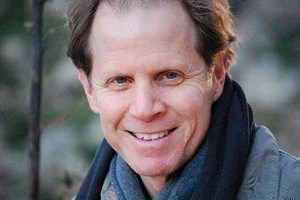
This is a recorded interview with Dr. Daniel Siegel on his book ‘Mindsight’.
Dr. Daniel Siegel is a leading Clinical Psychiatrist and Co-director of the Mindful Awareness Research Center at UCLA, researching and using mindfulness to help improve wellbeing through relationships and more.
He has spoken with the Dalai Lama, at Google University and at TEDx.
He has a special interest in the practice of mindfulness, especially in how it stimulates the brain to grow new, more integrated circuits ~ which may be at the heart of well-being, including emotional balance and resilience, enhanced relationships and friendships, and greater empathy and connectedness.
In this conversation
Recorded for Shamash’s mindfulness radio show, this is a wide-ranging interview with Dr. Daniel Siegel — clinical professor of psychiatry at UCLA, co-director of the Mindful Awareness Research Center, and a founder of the field of interpersonal neurobiology — about his book Mindsight: The New Science of Personal Transformation.
Siegel opens with his “triangle of well-being”: mind, brain and relationships as three facets of one reality. He offers a rare working definition of the mind — “a process that regulates the flow of energy and information” — locating it not just inside the skull but in the connections between us. From there he explains integration (the linking of differentiated parts) as the foundation of health: an integrated brain, family or community is flexible and harmonious “like a choir singing in harmony,” while a non-integrated one collapses into rigidity or chaos — a framework he suggests maps onto nearly the whole manual of psychiatric disorders.
He describes how mindfulness builds mindsight and, after eight weeks of MBSR, produces measurable brain changes — Richie Davidson and Jon Kabat-Zinn’s “left shift” toward approaching rather than withdrawing, a stronger immune response, and growth in the brain’s integrative fibres. Most movingly, he explains how mindfulness helps us become our own best friend: getting beneath the “top-down imprisonment” of judgment and harsh self-criticism so we treat ourselves with the same kindness we’d offer a friend. He closes with his concept of transpiration — how deep integration naturally dissolves a narrow sense of “I” into a wider, connected “we” (an expansion, he stresses, not a loss of self) — followed by a listener Q&A on mindfulness for schizophrenia, PTSD and dissociation, addiction, and children with ADHD.
Key takeaways
- The triangle of well-being — mind, brain and relationships are inseparable; don’t glorify the brain above relationships.
- A definition of mind — the embodied and relational process that regulates the flow of energy and information.
- Integration is health — linked, differentiated parts bring flexibility; without it we fall into rigidity or chaos.
- “Losing your mind” — when the brain’s integrative circuits go offline we act irrationally; the work is to take responsibility and repair.
- Mindfulness changes the brain — the MBSR “left shift,” better emotional regulation, attention and empathy, and growth in integrative fibres.
- Become your own best friend — mindfulness frees you from harsh self-judgment so you can meet yourself with kindness.
- Transpiration — integration expands identity from “me” to “we,” deepening the self rather than erasing it.
📄 Read the full transcript
Hello and a warm welcome to the show. This week we have a very interesting guest. It's Dr Daniel Siegel. He's currently clinical professor of psychiatry at the UCLA School of Medicine, where he is on the faculty of the Centre for Culture, Brain and Development and the co-director of the Mindfulness Awareness Research Centre. He's a very famous figure and has written many, many books and is a truly talented, gifted and intelligent scientist who's really pushed the field of both mindfulness and a whole new field called Interpersonal Neurobiology into the world.
He's got a unique ability of making really complex difficult scientific topics easier for people to understand and I first found out about his work when I read the book Mindsight the new science of personal transformation and I interviewed him in particular on that book but also generally to find out more about his work. Now just to give you a bit of an idea of the kind of things he gets involved in he's been invited to lecture for the King of Thailand Pope John Paul II, His Holiness the Dalai Lama, Google University and TED.
So really lucky to manage to get just over half an hour of Daniel's time. So I hope you enjoy the show and get something out of it and let me know if you enjoy it and what you thought of it and I'd love to hear your feedback. Hi, good afternoon. Good afternoon. Perhaps just if you could start with because some people may not have heard of you and your work. So would you be happy to just start with a bit of background about what you do and what you're interested in?
Is that okay? I'm a psychiatrist who's also trained as a scientist and I work in a number of different fields studying relationships and health and development and things like that. And I work in a particular area that combines different sciences together called interpersonal neurobiology. And so I'm the editor of a series of over 15 professional textbooks I've written a few books for mental health practitioners, but also for the general public on parenting and a book called Parenting from the Inside Out, a book for the general public called Mind Sight, One Sees the Mind.
Fantastic. And that's the book I've been reading recently, actually, and I've really enjoyed it, yeah. And one of the first key things you talk about is this triangle of well-being. say the mind, brain and relationships is the triangle of well-being. I wonder if you could explain why why you chose those three as opposed to anything else. Yeah, well you know a couple of things in my work as a psychiatrist I found that by understanding relationships and the importance of our interpersonal communication with each other you could actually track how people could have lives filled with health or lives that were filled with kind of a shutting down kind of rigid process or that they'd be filled with chaos.
So relationships became something that seemed to me, even though it wasn't in my own training, but in my work in research, really important to put front and center. At the same time, you know, the body is extremely important and in particular the The way energy flows through the body and swirls itself into information, which is what the nervous system does, that seems to be very important too in connecting nervous system function, which I just summarized in the word brain, but it really refers to the extended nervous system throughout the entire body, and the way relationships work.
So it became natural to talk about the brain and relationships, even though that was kind of an unusual way to couple those two things together. And the mind, of course, is something people talk about, but amazingly people in the field of philosophy or even science and the field of mental health, there's no working definition of the mind. So it's the mind defined as a process that regulates the flow of energy information became something distinct from just the nervous system functioning or relational functioning. The mind is both within the body as a whole and in relationships.
So those three things seem to be a very important place to begin and naturally you can talk about all sorts of other things that might be related. You can talk about spirituality and our interconnectedness which is a part of of, I think, what this energy and information flow can be seen as involving. Okay, so the spiritual aspect of things could be defined as part of what you called mind? Yeah, well, in the sense that, you know, the teachings I've done lately in settings, I think, which a lot of people call spiritual, one with a meeting in Europe, in Germany, the topic was spirituality and education.
had a number of students in the room and so I said to them, you know, what's your definition of spirituality? And even though everyone had a slightly different way of describing it, people said that it was your sense of being connected to a larger whole. And that connectedness in many ways is about how energy and information are, you know, weaving us together in these networks that have invisible forces connecting them. I think there's a lot to say. You can say a lot about the science of that you know in terms of understanding the properties of energy but yeah I think for spirituality from the subjective sense that's what people seem to mean and and that would be then in that sense a property of energy flow which would be under the purview of the mind yeah and and I like that definition of a flow of energy and information I remember watching a video online you were talking to lots of I think it's therapists and and they all seem to agree with you that that definition of mind is the flow of energy and information.
Yeah when you think about the mind as a process that regulates it you place the mind both in the body and in like what's happening in shavas between me and you now then you can say well you know this is this is where the mind is not just limited to your bodily self and that's why, you know, any practice like a reflective practice that frees you from the tyranny of a view that we're all separate from each other, what Einstein called an optical delusion of our separateness.
Those are our practices, reflective practices, that I think move us toward hell, because we get out of this prison of thinking we're so separate. Really interesting. Okay. When I was reading your book there was lots of kind of different examples of you kind of in working as a therapist with your clients and you talked a lot about the way the brain works with them and I was just wondering what would you say are the key aspects of the way the brain works that you think every adult should know?
Well that's a great question, you know what I try to do with everyone is let them know that, first of all, the mind, our subjective experience of life, is an absolutely mysterious and wonderful way that we're alive on this planet. No scientists, no taxi drivers, no librarians, no one knows how the property of neurons firing and the internal subjective sense you have of, you know, being alive, of smelling a rose, of seeing a beautiful painting, of, you know, feeling gratitude for being alive. All those subjective textures that are the essence of mental life, no one knows how that in any way really interfaces with the physical property of neurons firing.
When it comes to this important question you're asking, what do I think every adult should know about, you of their brains, the first thing I say is we actually have no idea how subjective mental life and the objective physical property of the brain, you know, connects with each other. We do know that there are correlations and the reason I bring that up is because some people are seduced I think by the notion that the brain and its activity is just all that the mind is and yet when you do that, you limit your ability to understand, for example, the relational part of the brain and the relational part of the mind for that matter.
So once we embed the mind both relationally and in the brain itself, then I feel more at ease than talking about the brain, because I just think we shouldn't glorify the brain as being more important than relationships, for example. That's the first place to start. Then in terms of the brain itself, You know, there's some really fabulous studies about the brain. For example, one is to say that the parts of your brain that help you balance your emotions are very much related to the same parts of the brain that allow you to connect with other people socially.
So put that another way, the social circuits of your brain are also the regulatory circuits And that shows you why, for example, how we relate to each other with communication patterns, let's say between a parent and a child, has such a huge impact on the way we function in the present moment. And for a child, it influences how that child's regulatory circuits will develop within that relationship. That's the first take home message. is that sometimes these regulatory circuits in the brain can temporarily shut off. In the book I call that the low road where usually you're integrated and things are all pulled together as a whole and you can be pretty flexible and caring and compassionate and all that.
But sometimes something happens and you aren't that way and a lot of people have a hard time admitting that they were, I don't know what you say in England, but in the In the United States, we say things like flip your lid, or cut off the handle, or blow your top, or something like that. Yeah, I've seen, I've heard that in the films, the American films. Yeah, what would you say in England? Um, lose your mind, maybe? Lose your mind, okay. So there you go. So this is basically the neural correlation with losing your mind.
The circuits that connect a bunch of different areas together are the circuits that are regulatory. They help balance, let's say, emotions and how your heart works and stuff like that. So when those integrative circuits are temporarily shut down, you lose your mind. You know, in the United States, you flip your lid. When you do this, then you can do things that are really irrational and mean and hurtful and people don't acknowledge that they've done that. And the downside of that is that the person you've done it to, of course, is injured, but never gets an apology or repair.
You yourself feel like you're a monster. So that's one of the second really important things to realize that the brain can go offline and become non-integrated temporarily and that rather than beating up on ourselves, we have to take responsibility for our actions, acknowledge what happened, go back and make a repair. with ourselves and then with the other person so you can be ready for explaining what happened to you. That's another thing. I guess the third thing I would say is this, and it relates to the second point.
We now know from a number of different studies that the parts of the brain that pull its various regions together into a functional whole are called integrative circuits. And integration, this idea of linking different parts together, is this hugely important phenomena that happens in the nervous system, but it also happens in our relationships that promotes, I believe, health. And I know this is a maybe a strange way of thinking about it, but when a system like a nervous system or a family or a community even is integrated when you're linking different parts It's the most flexible and adaptive.
It's like a choir singing harmony Yeah, so it feels vital and enriched but when a system is not integrated it moves in one of two directions It moves either into rigidity where things are stuck and shut down. Yeah, or it moves to chaos So that would be I guess a third major thing I would say to people is that we now know that when the brain is integrated it's healthy. When it's not integrated it's either stuck in rigidity or chaos and that basically explains virtually the entire manual of psychiatric disorders that here in the United States we use called an ESM-IV.
So it's a whole new way of thinking about a troubled life versus a life that's with well-being. Wow it's a nice way of kind of bringing in all those different ideas into, in a way it's a it's a form of integration in itself Yeah, isn't that exciting? It kind of overlaps in that way. That's what's so exciting about this field of interpersonal neurobiology. We have an online course through the institute I work at, the Minesight Institute, and you've got 150 people around the planet or in England, some are in continental Europe, we have people in Thailand and Australia in Iran, in South America, you know, and we're all one at the same time talking about these fundamental issues like mindfulness and integration or health and selection and relationships.
And I think we're at a paradigm shift where our way of embracing concepts of mind and mental health are really about to come onto the field of mental health work like psychotherapy and medical care as well as the field of education, so it's a really exciting time. Yeah, yeah, I think so. And I'm glad you mentioned mindfulness because, yeah, I feel that there's a lot of growing interest in that too. I was just wondering what you know about the latest research and findings about mindfulness and the effect it has on the brain.
In particular, how does mindfulness work? Right, well, it's a great question. I kind of came at it backwards in a way. I came as a therapist not knowing about mindfulness. I got trained as a scientist studying relationships not knowing about mindfulness and work with this concept called Mindsight, which is really how do you track energy and information flow and move it toward integration. That's what Mindsight is within your relationships or within your body. And around that time, you know, I wrote a book first about the science of child development called The Developing Mind and then a book that translated that for parents called Parenting from the Inside Out.
And my co-author and I used the term mindfulness just to mean, at least in American English, I'd be interested to know in British English how it is. In American English, we use the word mindfulness meaning being conscientious and intentional and purposeful in what you do, like if you're walking, you know, beneath a low threshold, you want to be mindful of your head so you don't bump it. Do you use that in England too? Yes, that's right. Yeah, that would be the traditional definition of mindfulness. Yeah, so we used it that way, like we said, okay, as a parent you should be mindful, meaning, you know, awake and intentional in your parenting.
So people afterwards asked us, you know, when the book came out and we were doing workshops on the book, they'd say, you know, well, when are you going to teach us to meditate? We'd say, what are you talking about? Well, you said mindfulness is a really important principle. We said, yeah, but that's being intentional. What are you referring to? They go, mindfulness meditation. And I was so naive. I mean, I just was unfamiliar with that whole 2,500 year old practice. And it was really freaky. And around the same time, a conference was coming up and I was put on a panel with a fellow from the United States, who's one of the major researchers in applying mindfulness practice, the contemplative, meditative kind of mindfulness, into the medical field, John Cabotin.
And I said, look, I don't know what I'm talking about, but it seems to me what we found in my field of parent-child relationships called attachment theory from John Bowlby from England began with Mary Ainsworth. And I said, well, it seems like the findings we have about secure parent-child attachment outcomes is virtually identical to your outcomes of teaching people to meditate mindfully. Wow. And he said, yeah, that is true. He didn't know about it, but what I showed the parallels. Then I said, and this part of the brain right here behind your forehead, this part integrates everything together and in fact this part is a third area that overlaps.
So we have integrated function of the brain, the outcome of loving relationships that are called securely attached between a parent and a child, and then mindfulness, which I think is what I said to him in the panel and ultimately wrote a book about it called The Mindful Brain. I think that mindfulness meditation is a way of attuning to yourself with love and kindness, just like a parent-child relationship that's secure is where the parent attunes to the child with love and kindness. One is a relational form of attunement which is ultimately actually a form of integration.
The other is an internal form of attunement which is a form of integration and both those correlate with integrative functioning in the brain. So you know in the mindful brain book what I did was took this inspiration that I got from being an attached researcher having just by accident written the term in mindfulness, getting to know John Cabot then. And then John said to me, hey buddy, you know, you don't have any experience, you have ideas, but go get some experience. So in the mindful brain book, I talk about, you know, going on these meditation retreats and diving into meditation head first, you know.
Yeah, that kind of links in quite well, because it's interesting saying how it kind of, mindfulness helps you to kind of be kind to yourself and I saw in your book that you mentioned that mindfulness helps people to become their own best friend. Yeah. How does it do that? That's what was going on, yeah. How do you think mindfulness actually does that? How does it make people become their own best friend? Yeah, well a couple things. I mean as you asked earlier too to finish that up and connect it to your question now, you know the research is fascinating because after eight weeks of teaching Mindfulness Meditation through this process called Mindfulness-Based Stress Reduction, MBSR, you can show that people's brains start to change in certain very helpful ways.
One is just you get what's called a left shift, which basically means when you're confronted with something that's challenging, instead of withdrawing, which would be a right frontal electrical activity state withdrawing, you actually approach the thing. So left shift is a wonderful finding that Richie Davidson and found with John Cabotin that demonstrates that mindfulness gives you basically a neurosignature of resilience to approach rather than withdraw. So that's a really important thing. It also improves your immune system. Later studies show that long-term meditators have increased growth in these integrative fibers that I've been referring to that didn't exist at time when I first wrote the book, but we've now had confirming studies on the initial study that came out at Harvard UCLA that show these important regulatory fibers that are also integrative in your life, they grow when you meditate.
So that's there. A number of other studies basically show you have more flexibility, your attentional capacities are improved, the the ability to regulate your emotion is enhanced. Even empathy increases. So all those are really good things and that's why research has shown mindfulness is helpful for reducing the relapse. If you've had three or more intense depressive episodes, it helps with anxiety. It's probably helpful for trauma, but we haven't had control studies yet that show that it's helpful for reducing relapse drug addiction use, and it's also important for use in certain disorders like obsessive-compulsive disorder or borderline personality disorder.
So in the research, it's really really looking great from a conceptual point of view for all of us in everyday life. I think the way mindfulness allows you to become your own best friend is it takes a certain process in the brain where you get flooded with what I call top-down imprisonment that is lots of expectations, lots of judgments, lots of harsh criticism, even an internal voice that's harsh to yourself. And it allows you by encourage you from the beginning to track sensations like the sensation of the breath to get beneath those top-down flows of information in prisons and it frees you literally to to start being with things as they are rather than as your brain is making you think they should be.
Okay. Instead of shoulding on yourself, you become open to who you are. So if you think about like a best friend, you know, let's say your best friend comes over your house and, you know, he's having a difficult day. You don't say to him, oh, this is what you should have done. You should have done this. You should have done that. You should have done that. No. So you wouldn't talk to your best friend like you usually talk to yourself. Yeah, that's true. best friend you say gosh you know you did the best you could yeah and hey you really tried to figure it out and you know my you really you know you got all these wonderful things even though right now you're feeling down you know the big picture things are gonna get better you're gonna be okay yeah that way we would talk to a best friend why don't we do that with ourselves and I think that's what mindfulness invites you to do and that's why I think it's so powerful because you know you basically get to live with your own best friend inside your body.
How much better can it get than that? That's why mindfulness is something everybody should be learning. Because I think a lot of what happens in the world is people are so critical of themselves and naturally they're critical of other people. There's so much inner-related stress that they're just freaking out. Anyone would be under that much stress and we need to give them relief from that stress Yeah, and really try to help them literally become their own advocate. Yeah, that's a really nice way of saying it I think I can understand now why monks go on retreats for years and years.
It's just them sitting with their own best friend Exactly, you know you see the smile on their face, you know, and you really can feel the change I mean, I got to tell you I mean we just got off an online. We have this online seminar we're dealing with mindfulness now in know, today we did this meditation where you're able to drop into this open space of possibility. You know, in this last book I wrote after Mindset, I wrote a book called The Mindful Therapist, and you know, I have this quantum view of how the mind and brain interact with each other, and in there there's this thing called the open plane of possibility which kind of brings you down to the spacious sense of openness to what could be.
So we did this practice that I actually introduced first in The Mindful Brain, and it's in the Mindset book called the Wheel of Awareness Practice, we got deeply into the hub which is awareness and the rim which is all these things to be aware of and in the practice today you should see everybody's responses because they yeah just to learn a technique to bring you right to the heart of the matter into getting away from preconceived ideas and top-down imprisonment bring you into this spaciousness of virtually infinite possibility of what the brain is able to conjure up when the mind brings itself into this open space.
The feelings, it was just so amazing that everyone around the globe write in what that was like for them and it's just so thrilling and I it just gives me a lot of optimism. Yeah. Our species that you know we can do these intentional practices to bring peace inside of ourselves and as Thich Nhat Hanh says, you know, I mean, peace is every step, and as Gandhi said, we have to be the change we want to see in the world. When you can create that in yourself, you can encourage other people to find a way to bring more positive energy and openness into the world.
Wow. That's amazing. That course sounds really interesting. When's the next one starting? I mean, it's something you can listen to the recordings of, and it's, I gotta say, there's something about having a global community at the same time every week, literally all around this planet, people are online, talking with each other. Yeah, it's amazing. And I'm so happy technology can bring this to us like that, and the Mindsight Institute is where you'll get more information. Okay, I'll have a look, yeah. I mean, I've experienced something similar Facebook groups because I update that on a regular basis and it really feels like we're a big group of international friends together interested in a certain topic and discussing it and it's amazing how technology can bring people together like that.
It's fantastic, you know, and I think it's a way to really bring technology into a positive focus for improving all of our lives and the planet as a whole. So I'm really hopeful about things. It's quite interesting when you mentioned this hub of awareness and talking about awareness. One area that I'm really interested in is this effect of mind-sight on identity and our sense of personal identity. And I enjoyed reading your concept of what you call the transpiration. And in the end of your book, I thought you beautifully said, if if I could just quote you, transpiration is how we dissolve our sometimes confining sense of an I and become a part of an expanded identity, a we larger than even our interpersonal relationship.
Yes. I wonder if you could say a bit more about what transpiration means and maybe some examples. Yeah, you know, first of all, thanks for, I really appreciate you, Shama, reading the Mindset book, because I guess it just came out in England, didn't it? I think, yeah, I think it did, yeah, yeah, yeah. Is it the American version? No, no, no, it's recently come out in England, so I got the copy. Oh, that's so beautiful. Yeah, you know, it's incredible, because in English, in American English anyway, couldn't find a word to describe what my patients were experiencing, and me too, as they would work on these different domains of integration, they seem to literally, like the quote says, you know, dissolve this sense of a private self.
Yeah. Realize there was also a self that was part of this much larger whole. Yeah. You know, that, I mean, in Einstein's terms he talks about, you know, widening our circles of compassion. Yeah. And just plain English terms it was like the way of saying this is me was really more about a we, not just people you knew but just being part of a larger process. So I tried on different words in American English, people just get frustrated, don't use that word, don't use it. I made up a word meaning to breathe across, transpire.
Yes. It turns out that botanists, people studying plants, you know they use that word for gases diffusing across the cell wall. Yes. The transpiration. Yes. So far no botanists have gotten upset that I've been using that word too. I didn't realize it was a botany word. Yeah. The idea of it is to breathe across boundaries of your skin that separate one person from another and also to breathe across the different domains of integration like linking the left and right side of the brain together or linking the lower part of your nervous system but the higher part or there's all these domains I talked about in the Mindsight book and when you do that it's like this integration of integration and this experience happened over and over again.
I didn't think it was just you know unusual it seemed to be actually unusual when people work at these deep levels of you know integrating themselves in their lives, then they would become very aware, and in fact their definition of self was expanding. And it was really beautiful to behold, it is beautiful to behold, and you know, so that's what I write about in the book, is how, you know, it's not that you try to achieve this, it's almost like it emerges from these natural states of integration.
When you work at those intentionally this transpirational integration to arise. Yeah I mean I think a lot of people experience that when they're practicing mindfulness or meditation for some time as you say and I've always felt that it's some there's something important I think that's an important part of mindfulness when you have this insight to not just being just this physical just trapped within this bones and skin but there's something more. Exactly You know, it's interesting. I guess maybe as a scientist and as a physician for me There's something more you're describing is totally consistent with science.
Yeah, don't have to I mean I have nothing against it all metaphysical thing or whatever. You know as a scientist for me to communicate with my scientists Colleagues, I've got to stick with science. Yes, I do so the exciting thing for me is to say Transpiration is a totally scientific concept it's scientifically explainable when you look deeply at the nature of mind as we've defined it and it's brain and relationship then you can understand why transpiration emerges out of it and the really I think the beautiful thing in terms of your what you're saying about mindfulness is that unlike what a lot of people think before they get into it where they think oh I have to get rid of a self and you know I don't want to is all myself.
It's not about losing yourself. Anything is just expanding, broadening and deepening a sense of self. And so what I say to people who are nervous like about trying reflection or developing mind-sight skills or specifically you know we would say working on mindfulness techniques or whatever and they say I'm gonna lose myself. I said no, you're actually gonna get closer to who you are and then open up in ways you can't even imagine that are positive for you and everyone around you ways of connecting. Yeah. So that's I agree with you I think Michael it does naturally invite this kind of opening up on identity not losing it.
No. Actually expanding it. Yeah I'm glad you said that because yeah that is a fear for a lot of people but as you say there's a sense of deepening into the core of who we really are rather than losing ourselves. Yeah exactly. So you know and now that we have a scientific view of this, which I tried to articulate as clearly as I could in the Mindsight book and the Deep Science, of course, is in the Mindful Brain book, and for therapists, the Mindful Therapist book is there, and I have other books that are in the works.
I think the step we need to take as a global community and as a modern culture is to realize that if people are an automatic pilot, then, you know, there's a natural tendency to feel divided, to have judgment, to, you know, in a way, have a very narrow circle of concern. And I think what we really need to do is understand the science that says because of the construction of the human brain, as a culture, what we're going to need to do is have intentional reflective practices like mindfulness practices that help move us in a way individually, relationally, and even in larger communities toward this much more open compassionate state.
If we don't do that, I don't think there's much of a future for our species. Yeah. If we do do that, I think the potential for us to create a much kinder world for all us to live in is just tremendous. I thought you put that really well. It's much bigger than just for individuals. It goes out to society and beyond this work, doesn't it? It really does. It's great if you feel motivated to do it for your own sake and that's fine. It's going to improve your health.
But it's a win-win-win situation because it improves your health. The people around you will actually be healthier. If you just look at the whole idea of how connective you are on social networks, you know, your friend's friend's friend will be healthier, but then you look at the way the whole global world is, that spreads out. And so there's no time like the present to start getting with the present in mindful practice. That's a good way of putting it, yeah. I've got a few kind of four or five specific questions from people from my Facebook page.
Would it be okay if I asked those now? One gentleman called Francesco Scavelli, when I said that I was interviewing you, he said wow, I'm reading the mindful brain in Italian and his question is when can mindfulness be applied in script schizophrenic patients? It's a great question, you know, when I ask long time mindfulness teachers that question their comment is they should, people who are at risk of psychosis should not be given long periods of silence, like a silent retreat or anything like that. But in their experience, this isn't me, but this is quoting other teachers, you know, a few minutes of reflective practice of a mindfulness story can be helpful to reduce stress, even with a psychotic condition like schizophrenia, but never long-term ones, because those can be too destabilizing.
Okay, so just chill ones. Yeah, and there is a group called Wind Horse that is actually using these techniques with psychotic disorders. They're based in Massachusetts, they're opening up a new place in California next month and I would check out their website because they've been actually doing using mindfulness practice with people with disorders like that and with excellent results. Wind Horse, W-I-N-D. Yeah, it's Wind Horse. Okay. The next one was from Dali D. Gagni, I think it is, from Canada. He said, I've started to read Dr.
Siegel's latest book, The Therapist, The Mindful Therapist. It's quite exciting and I plan to review it for my blog. For those of us who have long been aware that as therapists we are healers and what it is that allows us to heal. The Mindful Therapist provides answers which incorporate the latest of interpersonal neurobiology and wisdom of mindfulness. He goes on to say, I'd be very curious to know what Dr. Segal's thoughts are on the use of mindfulness for a patient who has post-traumatic stress disorder and a history of dissociation.
Conventional logic is that meditation is contra-indicated for such patients. My own sense is that though instruction must be very carefully given, that in the long run, mindfulness is an asset for someone who deals with dissociation. And for the record I have instructed patients who dissociate with mindfulness. Yeah well first of all thank you for the comments about the mindful therapist book which I appreciate. You know in the mindful brain book I actually talk about a patient with dissociative disorder who used the wheel of awareness practice to great benefit and she there's a quote from her in that book.
And I agree you know with your reader's comments that we should always be very careful, you know, there were about 28 of us who gathered together to look at a mindfulness approach to treating trauma. Bessel Vanderkoek was there, Jack Kornfield, John Kabat-Zinn and others, you know, and the view that was described by this large group was that in fact at this point there are no controlled studies to show the use of mindfulness in PTSD and post-traumatic stress disorder, but there was every reason to think that done with caution, just like is being described in the comments, it should be very helpful and I do a lot of work with people with dissociative disorders and it can be a very helpful technique when applied very carefully, it can actually be a great help to people with dissociation.
So they find, for example, in the hub of the mind, a common core in which different rim elements where the real awareness practice goes are just aspects of the mind's activities but there is a central place of bringing awareness together so it can be very very helpful but i agree it needs to be done in a careful way we need to have the control of studies i think one of the things just to be aware of is if you have a client who for example was physically attacked then the breath awareness practice may be very difficult because if they were suffocated or a hard time breathing, it may bring up a panic attack.
So being very flexible in what types of mindfulness you use for the focus of attention could be very, very important for a skilled therapist to do. Okay. Okay. Thank you very much. The next one was from Anouk Teasdale and she asked, do you believe that mindfulness has an effect on neuroplasticity and the brain's ability to address imbalance, for example, habitually harmful behaviors? Yeah, I do. I actually think it does. The neuroplasticity piece, I think, is supported by the two studies I mentioned earlier that suggest, it's only post-hoc, but it suggests that mindfulness practices change the structure of the brain.
Yes. And those I refer to in the Mindful Therapist book. That's the first thing. So that we stimulate neuronal activation and get growth, so that would make a lot sense, especially in an area called the insula. You have interoception awareness of the internal state of the body. You know, the other part of the question about, you know, allowing the brain to write itself in self-destructive things, if you look at Marcia Linehan's work with using mindfulness in individuals with borderline personality disorder with a lot of self-destructive action, you know, Linehan has shown that, in fact, her dialectical behavior therapy is quite effective at helping people with self-destructive behaviors.
So that would be the empirical evidence to suggest, in fact, it does help, yes. Yeah, interesting. Okay. There's a simple kind of one-sentence question from Randolph Lum, and he says, what is the best method to help people with substance abuse addiction? Well, there, you know, of course alcohol is anonymous, an AAA type program has been shown to be extremely effective, so that's of course a support group, I think that's really helpful. You know, the mindfulness is embedded in the AAA approach, and in particular Alan Marlott's work, M-A-R-L-A-T-T, Marlott's work shows that mindfulness is very helpful for preventing relapse after recovery from drug addiction.
So they're just two really helpful strategies. Okay, great. Thank you. And the last series of questions is from Nancy Rolio from Quebec in Canada. And she's working with children with ADHD and she was asking, do you have any advice as she's starting a first pilot group for mindfulness for children with ADHD? Oh yes, of course. If you go to our website, I help run a research center called the Mindful Awareness Research Center, so that would be at www.marc, for Mindful Awareness Research Center, marc.ucla.edu. You'll find a published paper where we did a study on adults and teenagers with ADHD, and these were, you know, this was an open study, so it was called a pilot study.
It wasn't control where we were blind to the intervention. So it's only a pilot study, but the results we did get in this pilot study were really fabulous. We got excellent improvement. People who had challenges to attention with executive control, like focusing attention, sustaining attention, avoiding distraction. You can see that published paper I think is available to you through our website. And for other questions the DrDanSiegel.com website has other research centers I help run at UCLA and other programs, educational programs we have and things like that.
Okay. And then do you know some like structured empirically based programs regarding mindfulness to children? You know, we do have a couple of resources available to you. One is, there's a wonderful book that came out by Susan Kaiser Greenland, just came out this month, called The Mindful Child. Oh yeah, I've heard of that, yeah. It's a fantastic book, The Mindful Child by Susan Kaiser Greenland. We have a review of this, that answers this question at the Garrison Institute. So if you go to g-a-r-r-i-s-o-n garrisoninstitute.com, no, no, dot org, garrisoninstitute.org, we have what's called a survey report or something like that, where you'll see one of our committees looks at mindfulness and contemplative practices in schools, and this at least will tell you what's going on there, and those would be two important places to start.
Fantastic. Well, that was the last of the questions from the online. Wonderful. I think that brings us to the end. I'd just like to say thank you very much for your precious time. I really enjoyed it. Oh, Shamash, my pleasure. And I really want to thank you for the excellent work you're doing. Thank you very much. So, thank you for listening to the show. I hope you enjoyed it. And join us next week at 8.30 p.m. on Wednesday, where I'll be interviewing Dr. Marsha Lucas, who will be talking about her new book, book rewiring your brain for love which is all about using mindfulness, mindfulness meditation and exercises for improving your relationships so be sure to check it out next week next Wednesday at 8.30pm UK time.
For further details and recordings check out shamashaladena.com forward slash radio. You